The most common defense of The Book of Mormon is that Joseph Smith was too “ignorant and unlearned” to be able to write a book that complex, thus it must have been of divine origin. As evidence a quote by Emma Smith:
“Joseph Smith could neither write nor dictate a coherent and well-worded letter, let alone dictate a book like the Book of Mormon.”
Emma Smith
This is repeated over and over in conference talks, essays, news articles and books. The problem is it is not remotely true. We have a letter dictated by him in 1829 that is both coherent and well-worded.
Respected sir, I would inform you that I arrived at home on Sunday morning the 4th. after having a prosperous journey, and found all well. The people are all friendly to us except a few who are in opposition to everything, unless it is something that is exactly like themselves. And two of our most formidable persecutors are now under censure and are cited to a trial in the church for crimes, which if true are worse than all the Gold Book business.
We do not rejoice in the affliction of our enemies but we shall be glad to have truth prevail. There begins to be a great call for our books in this country. The minds of the people are very much excited when they find that there is a copyright obtained and that there is really books about to be printed.
I have bought a horse of Mr. Josiah Stowell and want some one to come after it as soon as convenient. Mr. Stowell has a prospect of getting five or six hundred dollars. He does not know certain that he can get it, but he is a going to try and if he can get the money he wants to pay it in immediately for books.
We want to hear from you and know how you prosper in the good work; give our best respects to Father & Mother, and all our Brothers and Sisters. To Mr. Martin Harris and all the company concerned tell them that our prayers are put up daily for them that they may be prospered in every good word and work, and that they may be preserved from sin here and from the consequence of sin here after. And now dear brother be faithful in the discharge of every duty, looking for the reward of the righteous. And now may God of his infinite mercy keep and preserve us spotless until his coming, and receive us all to rest with him in eternal repose through the atonement of Christ our Lord, Amen.
Joseph Smith Jr
It is absolutely clear that Joseph Smith could dictate a good letter. Several phrases and paragraphs could easily appear in the Book of Mormon. Emma had incentive to paint Joseph Smith as ignorant as possible, and one can hardly blame her. Her son was the new prophet of the Re-organized Church, and it was her opportunity to reframe the history in order to best set up her son for success. As evidence of this, she made the astonishing claim in the same interview that Joseph Smith never practiced polygamy!
Some defenders of the Book of Mormon might not be aware, and could be excused for using the Emma quote. But there are those that know better and still use the Emma quote. This is disingenuous.
The role and understanding of seer stones in the Church of Jesus Christ of Latter-day Saints has shifted throughout its history.[1] References to the Urim and Thummim (Latter Day Saints), spectacles, and interpreters are also included, as the term has been conflated at times with the term seer stones.[2]
Am I missing any? Let me know in the comments.
References prior to 1830
Person
Source
Date
Note
Reference
Johnathon Hadley
Palmyra Freeman
1829 August 11
Earliest known reference to the Book of Mormon anywhere[3]
“In the fall of 1827, a person by the name of Joseph Smith, of Manchester Ontario county, reported that he had been visited in a dream by the spirit of the Almighty, and informed that in a certain hill in that town, was deposited this Golden Bible, containing an ancient record of a divine nature and origin. After having been thrice such visited, as he states, he proceeded to the spot, and after penetrating ‘mother earth’ a short distance, the Bible was found, together with a huge pair of Spectacles! He had been directed, however, not to let any mortal being examine them, ‘under no less penalty’ than instant death! They were therefore nicely wrapped up, and excluded from the ‘vulgar gaze of poor wicked mortals!’ It was said that the leaves of the Bible were plates of gold, about eight inches long, six wide, and one eighth of an inch thick, on which were engraved char[ac]ters or hieroglyphics. By placing the spectacles in a hat, and looking into it, Smith could (he said so, at least) interpret these characters.”[4]
Rochester Gem
1829 September 5
“A man by the name of Martin Harris was in this village a few days since endeavoring to make a contract for printing a large quantity of a work called the Golden Bible. He gave something like the following account of it. In the autumn of 1827, a man named Joseph Smith of Manchester, in Ontario County, said that he had been visited by the spirit of the Almighty in a dream, and informed that in a certain hill in that town was deposited a Golden Bible, containing an ancient record of divine origin. He states that after the third visit from the same spirit in a dream he proceeded to the spot, removed the earth, and there found the Bible, together with a large pair of spectacles. He had also been directed to let no mortal see them under the penalty of immediate death, which injunction he steadfastly adhered to. The treasure consisted of a number of gold plates, about eight inches long, six wide, and one-eighth of an inch thick, on which were engraved hieroglyphics. By placing the spectacles in a hat and looking into it, Smith interprets the characters into the English language.”[5]
References from 1830 through 1839
Person
Source
Date
Note
Reference
Cincinnati Advertiser and Ohio Phoenix
1830 June 2
“[Joseph Smith] pretended that he had been entrusted by God with a golden bible which had been always hidden from the world. Smith would put his face into a hat in which had a white stone, and pretend to read from it, while his coadjutor transcribed.”[6]
John Sheerer
letter to Absalom Peters
1830 November 18
“[Joseph Smith] has been known, in these parts, for some time, as a kind of juggler, who has pretended, through a glass, to see money underground &c, &c.”[7]
“Martin Harris “is honest, and sincerely declares upon his soul’s salvation that the book is true, and was interpreted by Joseph Smith, through a pair of silver spectacles, found with the plates.”[8]
Anonymous Presbyterian letter
Worcester Independent Messenger
1831 May 27
“[Joseph Smith] has 10 years’ translating to do; he looks in a small stone he has, and there reads the will of the Lord and writes it for the good of his fellow-men; he can read a person’s heart by looking in his face.”[9]
“For several years preceding the appearance of his book, he was about the country in the character of a glass-looker: pretending, by means of a certain stone, or glass, which he put in a hat, to be able to discover lost goods, hidden treasures, mines of gold and silver, x. Although he constantly failed in his pretensions, still he had his dupes who put implicit confidence in all his words. In this town, a wealthy farmer, named Josiah Stowell, together with others, spent large sums of money in digging for hidden money, which this Smith pretended he could see, and told them where to dig; but they never found their treasure. … During the trial it was shown that the Book of Mormon was brought to light by the same magic power by which he pretended to tell fortunes, discover hidden treasures, etc. Oliver Cowdery, one of the three witnesses to the book, testified under oath, that said Smith found with the plates, from which he translated his book, two transparent stones, resembling glass, set in silver bows. That by looking through these, he was able to read in English, the reformed Egyptian characters, which were engraved on the plates. So much for the gift and power of God, by which Smith says he translated his book. Two transparent stones, undoubtedly of the same properties, and the gift of the same spirit as the one in which he looked to find his neighbor’s goods.”[10]
Booth had become antagonistic, and wrote a series of letters denouncing Smith.
“These treasures were discovered several years since, by means of the dark glass, the same with which Smith says he translated most of the Book of Mormon.”[11]
Anonymous Preacher
New Hampshire Gazette
1831 October 25
“At the place appointed he found in the earth a box which contained a set of thin plates resembling gold, with Arabic characters inscribed on them. The plates were minutely described as being connected with rings in the shape of the letter D, which facilitated the opening and shutting of the book. The preacher said he found in the same place two stones with which he was enabled by placing them over his eyes and putting his head in a dark corner to decipher the hieroglyphics on the plates!”[12]
Joseph Smith
1832 History
1832
Written in Smith’s own handwriting
“I am not learned but the Lord had prepared spectacles for to read the Book therefore I commenced translating the characters and thus the Prop[h]icy of Is<ia>ah was fulfilled.”[13]
Nancy Towle
1832 Book Vicissitudes
1832
She was a traveling preacher who passed through New York and visited the early church
“He accordingly went; and was directed by the angel to a certain spot of ground, where was deposited a ‘Box’—and in that box contained ‘Plates;’ which resembled gold; also, a pair of ‘interpreters;’ (as he called them,) that resembled spectacles; by looking into which, he could read a writing engraven upon the plates, though to himself, in a tongue unknown.”[14]
“It was translated by the gift and power of God, by an unlearned man, through the aid of a pair of Interpreters, or spectacles—(known, perhaps in ancient days as Teraphim, or Urim and Thummim).”[16]
Joseph Knight’s Recollection of Early Mormon History
1834 – 1847 (unknown exactly)
Written by Knight at an unknown time before his death.
“… [Joseph Smith] seamed to think more of the glasses or the urim and thummem [thummim] then [than] he did of the Plates for, says he, ‘I can see any thing; they are Marvelus.’ … now the way he translated was he put the urim and thummim into his hat and Darkned his eyes then he would take a sentance and it would apper [sic] in Brite Roman Letters. Then he would tell the writer and he would write it. Then that would go away the next sentance would Come and so on. But if it was not Spelt rite it would not go away till it was rite, so we see it was marvelous thus was the hol [whole] translated.”[17]
Peter Bauder
Book The Kingdom and Gospel of Jesus Christ
1834
From October 1830 interview with Smith
“He obtained a parcel of plate resembling gold, on which were engraved what he did not understand, only by the aid of a glass which he also obtained with the plate, by which means he was enabled to translate the characters on the plate into English.”[18]
“A ‘gold book,’ consisting of a number of plates of gold, fastened together in the shape of a book by wires of the same metal, had been dug up in the northern part of the state of New York, and along with the book an enormous pair of ‘spectacles’! These spectacles were so large, that, if a person attempted to look through them, his two eyes would have to be turned towards one of the glasses merely, the spectacles in question being altogether too large for the breadth of the human face. Whoever examined the plates through the spectacles, was enabled not only to read them, but fully to understand their meaning. All this knowledge, however, was confined at that time to a young man, who had the trunk containing the book and spectacles in his sole possession. This young man was placed behind a curtain, in the garret of a farmhouse, and, being thus concealed from view, put on the spectacles occasionally, or rather, looked through one of the glasses, deciphered the characters in the book, and, having committed some of them to paper, handed copies from behind the curtain, to those who stood on the outside. Not a word, however, was said about the plates having been deciphered ‘by the gift of God.’ Everything, in this way, was effected by the large pair of spectacles.”[19]
“Joseph’s neighbor Samuel Lawrence ‘went with him to a singular looking hill, in Manchester, and shewed him where the treasure was. Lawrence asked him if he had ever discovered anything with the plates of gold; he said no: he then asked him to look in his stone, to see if there was anything with them. He looked, and said there was nothing; he told him to look again, and see if there was not a large pair of specks with the plates; he looked and soon saw a pair of spectacles, the same with which Joseph says he translated the Book of Mormon.’ “[20]
Alva Hale
Mormonism Unvailed
1834
Brother in law of Joseph Smith
“‘ALVA HALE, son of Isaac Hale, states, that Joseph Smith Jr. told him that his (Smith’s) gift in seeing with a stone and hat, was a gift from God; but also states ‘that Smith told him at another time that this ‘peeping’ was all d—d nonsense. He (Smith) was deceived himself but did not intend to deceive others;—that he intended to quit the business, (of peeping) and labor for his livelihood:’ That afterwards, Smith told him, he should see the Plates from which he translated the book of Mormon;’ and accordingly at the time specified by Smith, he (Hale) ‘called to see the plates, but Smith did not show them, but appeared angry:'”[21]
Isaac Hale
Mormonism Unvailed
1834
Father-in-law of Joseph Smith
“The manner in which he pretended to read and interpret, was the same as when he looked for the money-diggers, with the stone in his hat, and his hat over his face, while the Book of Plates were at the same time hid in the woods!”[22]
Henry Harris
Mormonism Unvailed
1834
“[Joseph Smith] had a stone which he used to put in his hat, by means of which he professed to tell people’s fortunes. … said he had a revelation from God that told him they [the plates] were hid in a certain hill and he looked in his stone and saw them in the place of deposit. … By looking on the plates he said he could not understand the words, but it was made known to him that he was the person that must translate them, and on looking through the stone was enabled to translate.”[23]
“Instead of looking at the characters inscribed upon the plates, the prophet was obliged to resort to the old ‘peep stone,’ which he formerly used in money-digging. This he placed in a hat, or box, into which he also thrust his face. Through the stone he could then discover a single word at a time, which he repeated aloud to his amanuensis, who committed it to paper, when another word would immediately appear, and thus the performance continued to the end of the book. Another account they give of the translation, is, that it was performed with the big spectacles before mentioned, and which were in fact, the identical Urim and Thummim mentioned in Exodus 28–30, and were brought away from Jerusalem by the heroes of the book, handed down from one generation to another, and finally buried up in Ontario county, some fifteen centuries since, to enable Smith to translate the plates without looking at them! … Now, whether the two methods for translating, one by a pair of stone spectacles ‘set in the rims of a bow;’ and the other by one stone, were provided against accident, we cannot determine—perhaps they were limited in their appropriate uses—at all events the plan meets our approbation. We are informed that Smith used a stone in a hat, for the purpose of translating the plates. The spectacles and plates were found together, but were taken from him and hid up again before he had translated one word, and he has never seen them since …”[24]
Joshua McKune
Mormonism Unvailed
1834
Resident of Harmony Pennsylvania
“That they informed him that ‘Smith had found a sword, breast-plate, and a pair of spectacles, at the time he found the gold plates’—that these were to be shewn to all the world as evidence of the truth of what was contained in those plates;’ and that ‘he (M’Kune) and others should see them at a specified time:'” [25]
Isaac Hale
Susquehanna Register Interview
1834 May 1
Joseph translated the Book of Mormon “with a stone in his hat, and his hat over his face, while the Book of Plates were at the same time hid in the woods.”[26]
“Near the time of the setting of the Sun, Sabbath evening, April 5th, 1829, my natural eyes, for the first time beheld this brother. He then resided in Harmony, Susquehanna county Penn. On Monday the 6th, I assisted him in arranging some business of a temporal nature, and on Tuesday the 7th, commenced to write the book of Mormon. These were days never to be forgotten—to sit under the sound of a voice dictated by the inspiration of heaven, awakened the utmost gratitude of this bosom! Day after day I continued, uninterrupted, to write from his mouth, as he translated, with the Urim and Thummim, or, as the Nephites whould [would] have said, “Interpreters,” the history, or record, called ‘The book of Mormon.’ “[27]
Elijah Shaw
Exeter Christian Journal
1835 May 28
“Smith pretended that he had found some golden or brass plates, like the leaves of a book, hid in a box in the earth, to which he was directed by an Angel, in 1827,—that the writing on them was in the ‘Reformed Egyptian language;’—that he was inspired to interpret the writing, or engraving, by putting a plate in his hat, putting two smooth flat stones, which he found in the box, in the hat, and putting his face therein—that he could not write, but as he translated, one Oliver Cowdery wrote it down.”[28]
Patriarchal Blessing Book
1835 October 7
“The Following blessing was given by president Joseph Smith, Jr. through the Urim and Thummim, according to the spirit of prophecy and revelation, on Wednesday, the 7th of October, 1835, and written by president Frederick G. Williams, who acted as Clerk.”[29]
“…In the evening between 8 and 9 o’clock I was told by a young girl that she saw my wife and five children, apparently well, the little boy lying on the floor or hearth, she also said that she saw a little dark haired girl at and with Peter Whitmer’s family. The description answered for my Eliza very well as to size, etc. This girl sees by the help of a stone. She told me she saw a seer’s stone for me. It was a small blue stone with a hole in one corner, that it was 6 or 8 feet in the ground, not far from the lake shore, a little west of Buffalo on a hill, a tree growing near the spot. I think she said it was near the point of a hill.”[30]
“We are credibly informed that the Mormons have purchased of Mr. Chandler, three of the mummies, which he recently exhibited in this village; and that the prophet Joe has ascertained, by examining the papyrus through his spectacles, that they are the bodies of Joseph (the son of Abraham,) and King Abimeleck, and his daughter.”[31]
Joseph Smith
Journal
1835 November 9
“Also that the Urim and Thummim, was hid up with the record, and that God would give me power to translate it, with the assistance of this instrument he then gradually vanished out of my sight, or the vision closed.”[32]
Truman Coe
Hudson Ohio Observer
1836 August 11
Letter to the Editor, from interview with Joseph Smith
“An angel descended and warned him that God was about to make an astonishing revelation to the world, and then directed him to go to such a place, and after prying up a stone he should find a number of plates of the color of gold inscribed with hieroglyphics, and under them a breastplate, and under that a transparent stone or stones which was the Urim and Thummin mentioned by Moses. …The manner of translation was as wonderful as the discovery. By putting his finger on one of the characters and imploring divine aid, then looking through the Urim and Thummin, he would see the import written in plain English on a screen placed before him. After delivering this to his amanuensis, he would again proceed in the same manner and obtain the meaning of the next character, and so on till he came to a part of the plates which were sealed up, and there was commanded to desist: and he says he has a promise from God that in due time he will enable him to translate the remainder.”[33]
“Also that there were two stones in silver bows and these (put in <stones fastened> to a breast plate) which constituted what is called the Urim & Thummin deposited with the plates, and <the possession and use of these stones> that was what constituted seers in ancient or former times and that God <had> prepared them for the purpose of translating the book. …Immediately after my arrival there I commenced copying the characters of all the plates. I copyed a considerable number of them and by means of the Urim and Thummin I translated some of them which I did between the time I arrived at the house of my wife’s father in the month of December, and the February following. …We mutually agreed to settle <it> by the Urim and Thummin, and the following is the word which we received; …having desired with much earnestness that I should enquire of the Lord concerning them, I did so, through the means of the Urim and Thummin and obtained for them in succession the following Revelations.”[34]
Joseph Smith
Elders’ Journal
1838 July
“I obtained them, and the Urim and Thummim with them; by the means of which, I translated the plates; and thus came the book of Mormon.”[35]
A Brief History of the Church of Christ of Latter Day Saints Commonly Called Mormons
1839
“Through much difficulty, on account of persecution and poverty, he translated it by degrees, with the assistance of Oliver Cowdery and others, who wrote as he dictated. If I remember right, the language in which it was written on the plates, was the reformed Egyptian. And Martin Harris, who contributed much towards the publication of the Book, drew off several of the characters on paper, took them to the learned in New York, to see if they could be translated, but was requested to bring them the plates, which Smith was forbidden to do of the Lord, but was commanded to translate them himself, which he did, by the help of what he calls the Urim and Thummim, two stones set in a bow, and furnished by an Angel for that purpose. ‘After finishing the translation, the plates and stones of Urim and Thummim were again taken and concealed by the Angel for a wise purpose, and the translation published to the world in the winter of A. D. 1829 and ’30.’ “[36]
“With the records was found ‘a curious instrument, called by the ancients the Urim and Thummim, which consisted of two transparent stones, clear as crystal, set in the two rims of a bow. This was in use, in ancient times, by persons called seers. It was an instrument, by the use of which, they received revelation of things distant, or of things past or future.'”[37]
“There had been a revelation made to [Joseph Smith] by which he had discovered this sacred deposit, and two transparent stones, through which, as a sort of spectacles, he could read the Bible, although the box or ark that contained it, had not yet been opened; and that by looking through those mysterious stones, he had transcribed from one of the leaves of this book. …He was already in possession of the two transparent stones laid up with the GOLDEN BIBLE, by looking through which he was enabled to read the golden letters on the plates in the box. How he obtained these spectacles without opening the chest, Harris could not tell. …Pretended to look through his spectacles, or transparent stones, and would then write down or repeat what he saw, when repeated aloud, was written down by Harris.”[38]
“On my asking him by whom the copy was made, he gravely stated, that along with the golden book there had been dug up a very large pair of spectacles! so large in fact that if a man were to hold them in front of his face, his two eyes would merely look through one of the glasses, and the remaining part of the spectacles would project a considerable distance sideways! These spectacles possessed, it seems a very valuable property, of enabling anyone who looked through them, (or rather through one of the lenses,) not only to decipher the characters on the plates, but also to comprehend their exact meaning, and be able to translate them!! My informant assured me that this curious property of the spectacles had been actually tested, and found to be true. A young man, it seems, had been placed in the garret of a farm-house, with a curtain before him, and having fastened the spectacles to his head, had read several pages in the golden book, and communicated their contents in writing to certain persons stationed on the outside of the curtain. He had also copied off one page of the book in the original character, which he had in like manner handed over to those who were separated from him by the curtain, and this copy was the paper which the countryman had brought with him.”[39]
Josiah Jones
Article in Evangalist magazine
1841 June 1 (published)
1831 writing of an 1830 event
“In the last part of October, 1830, four men appeared here by the names of [Oliver] Cowdery, [Parley P.] Pratt, [Peter] Whitmer and [Ziba] Peterson; they stated they were from Palmyra, Ontario County, N.Y. with a book, which they said contained what was engraven on gold plates found in a stone box in the ground in the town of Manchester, Ontario County, N.Y., and was found about three years ago by a man named Joseph Smith, Jr. who had translated it by looking into a stone or two stones, when put into a dark place, which stones he said were found in the box with the plates. They affirmed while he looked through the stone spectacles another sat by and wrote what he told them, and thus the book was all written. … [Oliver] Cowdery was requested to state how the plates were found, which he did. He stated that Smith looked into or through the transparent stones to translate what was on the plates. I then asked him if he had ever looked through the stones to see what he could see in them; his reply was that he was not permitted to look into them. I asked him who debarred him from looking into them; he remained sometime in silence, then said that he had so much confidence in his friend Smith, who told him that he must not look into them, that he did not presume to do so lest he should tempt God and be struck dead.”[40]
“After this Joseph Smith was supernaturally assisted to read and to understand the inscription; and he was directed to translate a great part of it. The pages which he was not to translate were found to be sealed together, so that he did not even read them and learn their contents. With an assistant to correct his English, he translated so much of the inscription as now makes the book of Mormon.”[41]
Book, The City of Mormons, or, Three Days at Nauvoo
1842
As quoted by Henry Caswell, an English Reverend who visited Nauvoo
“The angel of the Lord appeared to him fifteen years since, and shewed him the cave where the original golden plates of the book of Mormon were deposited. He shewed him also the Urim and Thummim, by which he might understand the meaning of the inscriptions on the plates, and he shewed him the golden breastplate of the high priesthood. My son received these precious gifts, he interpreted the holy record, and now the believers in that revelation are more than a hundred thousand in number. I have myself seen and handled the golden plates; they are about eight inches long, and six wide; some of them are sealed together and are not to be opened, and some of them are loose. They are all connected by a ring which passes through a hole at the end of each plate, and are covered with letters beautifully engraved. I have seen and felt also the Urim and Thummim. They resemble two large bright diamonds set in a bow like a pair of spectacles. My son puts these over his eyes when he reads unknown languages, and they enable him to interpret them in English. I have likewise carried in my hands the sacred breastplate. It is composed of pure gold, and is made to fit the breast very exactly.”[42]
“With the records was found a curious instrument which the ancients called ‘Urim and Thummim;’ which consisted of two transparent stones set in the rim of a bow fastened to a breastplate. Through the medium of the Urim and Thummim I translated the record by the gift, and power of God.”[43]
“The record is now in course of translation by the means of the Urim and Thummim, and proves to be a record written partly by the father of the faithful, Abraham, and finished by Joseph when in Egypt.”[44]
“[Joseph Smith] said in time of war the Nephites had the advantage of their enemies by looking in the seer stone which would reveal whatever they wished to know. I believe a peepstone is one of the same piece with the Urim and Thummim, if we understood it.”[45]
“Joseph saw this and followed me Mother said he do not be uneasy all is right see here Said he I have got the key I knew not what he meant but took the article in my hands and examing it <*> <(*with no covering but a silk handkerchief)> <found> that it consisted of 2 smooth ❤ cornered diamonds set in glass and the glass was set in silver bows> con[n]ected with each other in the same way that old fashioned spectacles are made …””Joseph kept the urim and thumim constantly about his person an[d] he could by this means ascertain at any moment if> the plates were in danger or having just looked into them before Emma got there he perceived her coming and came up out of the well and met her. …””The thing which spoke of that Joseph termed a Key was indeed nothing more nor less than a urim and Thummim by which the angel manifested those things to <him> that were shown him in vision by the which also he could at any time ascertain the approach of danger Either to himself or the record and for this cause he kept these things constantly about his person …””I continued <said> Joseph my suplications to God without cessation that his mercy might again be exercised towards me and on the 22 of september I had the Joy and satisfaction of again receiving the <urim and Thummin> into my possession and I have commenced translating and Emma writes for me now but the angel said that the Lord woul[d] send some one to write for me and I trust that if it will be so. he also said that the <he> angel seemed <was> rejoiced when he gave him <me> back the plates <urim and Thummim> and that <God> was pleased with <my> faithfulness and humility and loved <me> for <my> penitence and dilligence in prayer in the which <I> had performed his duty so well as to receive the <urim and Thummin> and <was> able to enter upon the work of translation again. … “”They <were> soon deeply engaged in the work of writing and translation, and progressed rapidly; one morning however they sat down to their usual work when the first thing that presented itself to Joseph was a commandment from God that he and Oliver should repair to the water each of them be baptized they immediately went down to the susquehanah river and obeyed the mandate given them through the urim and Thumim …In the meantime, Joseph was 150 miles distant and knew naught of the matter except an intimation that was given through the urim and thummin.”[46]
Joseph Smith
In Book An Original History of the Religious Denominations at Present Existing in the United States
1844
Compiled by I. Daniel Rump
“With the records was found a curious instrument which the ancients called ‘Urim and Thummim;’ which consisted of two transparent stones set in the rim on a bow fastened to a breastplate. Through the medium of the Urim and Thummim I translated the record, by the gift and power of God.”[47]
“…went with Brother Harmon and Horr to see a boy look in a “peep stone,” for some money which he said he could see hid up in the ground. He would look and we would dig but he found no money; he said it would move as we approached it.”[48]
“I wrote with my own pen, the entire Book of Mormon [save a few pages], as it fell from the lips of the Prophet Joseph Smith, as he translated it by the gift and power of God, by means of the Urim and Thummim, or as it is called by that book, ‘holy interpreters’.”[49]
“At the time of the martyrdom, [Philo Dibble] rescued a small seer stone, at the Nauvoo Mansion House, from falling into the hands of the apostates. He brought this seer stone across the plains. Later, as curator of church history, he showed the death masks, the seer stone, and other items of historical value on his lecture tours throughout the territory of Utah.”[50]
History of the Pioneer Settlement of Phelps and Gorham’s Purchase
1851
Turner was a resident of Palmyra and acquaintance of Smith and Harris
Martin Harris said “that on the top of the box containing the plates, ‘a pair of large spectacles were found, the stones or glass set in which were opaque to all but the prophet;’ that ‘these belonged to Mormon, the engraver of the plates, arid without them the plates could not be read.’ Harris assumed that himself and Cowdery were the chosen amanuenses, and that the prophet Joseph, curtained from the world and them, with his spectacles read from the gold plates what they committed to paper.” … “They showed him such a pebble as may any day be picked up on the shore of Lake Ontario — the common hornblende — carefully wrapped in cotton and kept in a mysterious box. They said it was by looking at this stone, in a hat, the light excluded, that Joseph discovered the plates. This, it will be observed, differs materially from Joseph’s story of the angel. It was the same stone the Smiths had used in money-digging, and in some pretended discoveries of stolen property.” … “Long before the Gold Bible demonstration, the Smith family had, with some sinister object in view, whispered another fraud in the ears of the credulous. They pretended that, in digging for money at Mormon lull, they came across a chest, three by two feet in size, covered with a dark-colored stone. In the centre of the stone was a white spot about the size of a sixpence. Enlarging, the spot increased to the size of a twenty-four pound shot, and then exploded with a terrible noise. The chest vanished and all was utter darkness.”[51]
“The question is asked many times, ‘Has brother Brigham got the Urim and Thummim?’ Yes, he has got everything; everything that is necessary for him to receive the will and mind of God to this people.”[52]
“Monday, 25 Feb. 1856: President Young exhibited the seer’s stone with which the Prophet Joseph discovered the plates of the Book of Mormon, to the Regents this evening. It is said to be a silecious granite dark color almost black with light colored stripes somewhat resembling petrified poplar or cotton wood bark. It was about the size but not the shape of a hen’s egg.”[53]
“Joseph had a stone which was dug from the well of Mason Chase twenty-four feet from the surface. In this stone he could see many things to my certain knowledge. …In the first place, he told me of this stone, and proposed to bind it on his eyes, and run a race with me in the woods. …The two stones set in a bow of silver were about two inches in diameter, perfectly round, and about five-eighths of an inch thick at the centre; but not so thick at the edges where they came into the bow. They were joined by a round bar of silver, about three-eighths of an inch in diameter, and about four inches long, which, with the two stones, would make eight inches. The stones were white, like polished marble, with a few gray streaks. I never dared to look into them by placing them in the hat, because Moses said that ‘no man could see God and live; and we could see anything we wished by looking into them; and I could not keep the desire to see God out of my mind. And besides, we had a command to let no man look into them, except by the command of God, lest he should ‘look aught and perish.'”[54]
References between 1860 and 1879
Person
Source
Date
Note
Reference
Pomeroy Tucker
Book titled “Origin, Rise, and Progress of Mormonism”
1867
“With the book was also found, or so pretended, a huge pair of spectacles in a perfect state of preservation, or the Urim and Thummim, as afterward interpreted, whereby the mystic record was to be translated and the wonderful dealings of God revealed to man, by the superhuman power of Joe Smith. This spectacle pretension, however, is believed to have been purely an after-thought.” page 33″The Urim and Thummim, found with the records, were two transparent crystals set in the rims of a bow, in the form of spectacles of enormous size. The is constituted the seer’s instrument whereby the records were to be translated and the mysteries of hidden things revealed, and it was to supersede the further use of the magic stone.””The manuscripts were in the handwriting of one Oliver Cowdery, which had been written down by him, as he and Smith declared, from the translations, word for word, as made by the latter with the aid of the mammoth spectacles or Urim and Thummim, and verbally announced by him from behind a blanket–screen drawn across a dark corner of a room at his residence—for at this time the original revelation, limiting to the prophet the right of seeing the sacred plates, had not yet been changed, and the view with the instrument used was even too brilliant for his own spiritualized eyes in the light! This was the story of the first series of translations, which was always persisted in by the few persons connected with the business at this early period of its progress. The single significance of this theory will doubtless be manifest, when the facts are stated in explanation, that Smith could not write in a legible hand, and hence an amanuensis or scribe was necessary. Cowdery had been a schoolmaster, and was the only man in the band who could make a copy for the printer. … Here, by the power of God, and with the aid of two crystals set in a bow (the Urim and Thummim), he translated the unsealed portion of the records into the English tongue, in obedience to the divine command.” [55]
“He translated the most of it at my Father’s house. And I often sat by and saw and heard them translate and write for hours together. Joseph never had a curtain drawn between him and his scribe while he was translating. He would place the director in his hat, and then place his face in his hat, so as to exclude the light, and then read the words as they appeared before him.”[56]
Emma Smith
Letter to Emma Pilgrim
1870 March 27
“Now the first that my husband translated was translated by the use of the Urim and Thummim, and that was the part that Martin Harris lost. After that he used a small stone, not exactly black, but it was rather a dark color. I cannot tell whether that account in the ‘Times and Seasons’ is correct or not because someone stole all my books and I have none to refer to at present. If I can find one that has that account I will tell you what is true and what is not.”[57]
“His son Joseph, whom he called the illiterate, when about fourteen years of age, happened to be where a man was looking into a dark stone and telling people, therefrom, where to dig for money and other things. Joseph requested the privilege of looking into the stone, which he did by putting his face into the hat where the stone was. It proved to be not the right stone for him; but he could see some things, and, among them, he saw the stone, and where it was, in which he could see whatever he wished to see. Smith claims and believes that there is a stone of this quality, somewhere, for every one. The place where he saw the stone was not far from their house; and, under pretence of digging a well, they found water and the stone at a depth of twenty or twenty-two feet. After this, Joseph spent about two years looking into this stone, telling fortunes, where to find lost things, and where to dig for money and other hidden treasure. …During that year, Joseph went to the town of Harmony, in the State of Pennsylvania, at the request of some one who wanted the assistance of his divining rod and stone in finding hidden treasure, supposed to have been deposited there by the Indians or others. …Under the first plate, or lid, he found a pair of spectacles, about one and a half inches longer than those used at the present day, the eyes not of glass, but of diamond. …Returning home, he one day tried the spectacles, and found that, by looking through them, he could see everything—past, present, and future—and could also read and understand the characters written on the plates. …Joseph, with spectacles on, translated the characters on the gold plates, and Harris recorded the result. …Joseph and Harris returned to Harmony, and found the plates missing—the Lord had taken them also. Then Joseph put on the spectacles, and saw where the Lord had hid them, among the rocks, in the mountains. Though not allowed to get them, he could, by the help of the spectacles, read them where they were, as well as if they were before him. …[relating a story from the Book of Mormon] They also found something of which they did not know the use, but when they went into the tabernacle, a voice said, ‘What have you got in your hand, there?’ They replied that they did not know, but had come to inquire; when the voice said, ‘Put it on your face, and put your face in a skin, and you will see what it is.’ They did so, and could see everything of the past, present, and future; and it was the same spectacles that Joseph found with the gold plates.”[58]
“By means of the urim and thummim ‘a pair of large spectacles;’ as Mr. Harris termed them, the translation was made, and Mr. Harris claims to have written, of the translations as they were given by Smith, ‘116 solid pages of [fools]cap: The remainder was written by others.'”[59]
“On Sunday, Sept. 4, 1870, Martin Harris addressed a congregation of Saints in Salt Lake City. He related an incident which occurred during the time that he wrote that portion of the translation of the Book of Mormon which he was favored to write direct from the mouth of the Prophet Joseph Smith, and said that the Prophet possessed a seer stone, by which he was enabled to translate as well as from the Urim and Thummim, and for convenience he then used the seer stone. Martin explained the translation as follows: By aid of the seer stone, sentences would appear and were read by the Prophet and written by Martin, and when finished he would say, “Written,” and if correctly written, that sentence would disappear and another appear in its place; but if not written correctly it remained until corrected, so that the translation was just as it was engraven on the plates, precisely in the language then used. Martin said that after continued translation they would become weary, and would go down to the river and exercise by throwing stones out on the river, etc. While so doing, on one occasion, Martin Harris found a stone very much resembling the one used for translating, and on resuming their labor of translation, he put in place the stone that he had found. He said that the Prophet remained silent, unusually and intently gazing in darkness, no traces of the usual sentences appearing. Much surprised, Joseph exclaimed, “Martin! What is the matter! All is as dark as Egypt!” Martin’s countenance betrayed him, and the Prophet asked Martin why he had done so. Martin said, to stop the mouths of fools, who had told him that the Prophet had learned those sentences and was merely repeating them, etc.”Martin said further that the seer stones differed in appearance entirely from the Urim and Thummim obtained with the plates, which were two clear stones set in two rims, very much resembling spectacles, only they were larger. Martin said, there were not many pages translated while he wrote, after which Oliver Cowdery and others did the writing.” [60]
Emily C. Blackman
History of Susquehanna County Pennsylvania
1873
” ‘Joseph, can anybody else translate strange languages by the help of them spectacles?’ ‘O, yes!’ was the answer. … ‘now if you will let me try the spectacles, and if, by looking through them, I can translate these strange languages into English, then I’ll be one of your disciples.’ “[61]
“Noah, after having preached the Gospel and published glad tidings among the nations, was commanded to build an ark. He had a Urim and Thummim by which he was enabled to discern all things pertaining to the ark and its pattern.”[62]
Orson Pratt
Journal of Discourses
1873 October 7
“The Most High says: ‘I deign to reveal unto you hidden things, things that have been kept hid from the foundation of the world.’ Among these hidden things that are to be revealed are the books of genealogy, tracing individuals and nations among all people, back to ancient times. It may be inquired: ‘How can all this be done?’ We answer, by the Urim and Thummim, which the Lord God has ordained to be used in the midst of his holy house, in his Temple. Just as fast as we are able to administer for them, so will the Lord God make manifest, by the manifestation of holy angels in his house, and by the Urim and Thummim, those names that are necessary, of our ancient kindred and friends, that they may be traced back to the time when the Priesthood was on the earth in ancient days.”[63]
The interpreters were “shaped like a pair of ordinary spectacles, though much larger, and at least half an inch in thickness, and perfectly opaque save to the prophetic vision of Joseph Smith.”[1]
First printed decades after the fact, from a report on a sermon given in 1836 in Meadville, Pennsylvania
“When the box was once safe upon deck every one then was anxious to hear what was in it, when we were told that it contained fourteen gold plates, covered with mysterious characters, together with the sword of Gideon and the spectacles of Samuel the prophet! Joe, he said, was a very illiterate man, was unable either to read or write; but when he put on his nose the prophet’s spectacles, and took the gold plates one by one, letter by letter and word by word presented themselves, and with the aid of an amanuensis the Bible that he held in his hand was a literal translation of the writing upon the gold plates.[64]
William D. Purple
Joseph Smith, The Originator of Mormonism
1877 May 2
“[Joseph Smith] said when he was a lad, he heard of a neighboring girl some three miles from him, who could look into a glass and see anything however hidden from others; that he was seized with a strong desire to see her and her glass; that after much effort he induced his parents to let him visit her. He did so, and was permitted to look in the glass, which was placed in a hat to exclude the light. He was greatly surprised to see but one thing, which was a small stone, a great way off. It soon became luminous, and dazzeled his eyes, and after a short time it became as intense as the mid-day sun. He said that the stone was under the roots of a tree or shrub as large as his arm, situated about a mile up a small stream that puts in on the South side of Lake Erie, not far from the New York and Pennsylvania line. He often had an opportunity to look in the glass, and with the same result. The luminous stone alone attracted his attention. This singular circumstance occupied his mind for some years, when he left his father’s house, and with his youthful zeal traveled west in search of this luminous stone. He took a few shillings in money and some provisions with him. He stopped on the road with a farmer, and worked three days, and replenished his means of support. After traveling some one hundred and fifty miles he found himself at the mouth of the creek. He did not have the glass with him, but he knew its exact location. He borrowed an old ax and a hoe, and repaired to the tree With some labor and exertion he found the stone, carried it to the creek, washed and wiped it dry, sat down on the bank, placed it in his hat, and discovered that time, place and distance were annihilated; that all intervening obstacles were removed, and that he possessed one of the attributes of Deity, an All-Seeing-Eye. He arose with a thankful heart, carried his tools to their owner, turned his feet towards the rising sun, and sought with wearing limbs his long desired home. On the request of the Court, he exhibited the stone. It was about the size of a small hen’s egg, in the shape of a high-instepped shape. It was composed of layers of different colors passing diagonally through it. It was very hard and smooth, perhaps by being carried in the pocket.”[65]
John H. Gilbert
Detroit Post and Tribune
1877 December 3
Gilbert was the chief compositor of the 1830 edition of the Book of Mormon (see E. B. Grandin)
“This change was rendered necessary to carry out the theory afterward adopted that Smith dug up these writings and translated them from ‘reformed Egyptian’ by means of a pair of supernatural spectacles. …But nobody but Joe himself ever saw the golden tablets or the far-seeing spectacles. He dictated the book, concealed behind a curtain, and it was written down by Cowdery. This course seemed to be rendered necessary by the fact that Joe did not know how to write.”[66]
Orson Pratt
Journal of Discourses
1877 December 9
“…we have every reason to believe that the time is not far distinct, and that there are some living among the young now upon the earth, that will live to behold great numbers of revelations given, and will behold other books come forth and other records translated by the Urim and Thummim, that same instrument that Joseph Smith used in the translation of the ‘Book of Mormon’, which will again come forth and be revealed to the seer and revelator that God will raise up by which these ancient records will be brought to light.”[67]
Speaking in reference to Joseph Smith receiving D&C 34[68]
“On arriving there Joseph produced a small stone called a seer stone, and putting it into a Hat soon commenced speaking and asked Elder Pratt to write as he would speak.”[69]
Cowdery had been dead decades when this was published
“Joseph received several revelations to which I was witness by means of the seer stone, but he could receive also without any instrument.”[70]
David Whitmer
Deseret News
1878 August 16
Cowdery had been dead decades when this was published
“Did Joseph use the Urim and Thummim when he translated? “The Urim and Thummim were two white stones, each of them cased in as spectacles are, in a kind of silver casing, but the bow between the stones was more heavy, and longer apart between the stones, than we usually find it in spectacles. Martin Harris, Oliver Cowdery, Emma and my brother John each at different times wrote for Joseph as he translated.”[1]
Orson Pratt
Journal of Discourses
1878 August 25
“The Prophet translated the part of these writings which, as I have said is contained in the Pearl of Great Price, and known as the Book of Abraham. Thus you see one of the first gifts bestowed by the Lord for the benefit of His people, was that of revelation, the gift to translate, by the aid of the Urim and Thummim, the gift of bringing to light old and ancient records. Have any of the other denominations got this gift among them? Go and inquire through all of Christendom and do not miss one denomination.”[71]
“At such times Joseph used the ‘seer stone’ when inquiring of the Lord, and receiving revelations, but that he was so thoroughly endowed with the inspiration of the Almighty and the spirit of revelation that he often received them without any instrument or other means than the operation of the spirit upon his mind.”[72]
John H. Gilbert
Letter to James T. Cobb
1879 February 10
“Late in 1827 or early in ’28, was the first I heard Harris speak of Jo’s finding the plates, and with the plates a pair of large spectacles, by looking through which Jo could translate the hieroglyphics on the plates into English.”[73]
“Our recollections of the precise language may be faulty, but as to the substance, the following is correct: … That in the same box with the plates were spectacles; the bows were of gold, and the eyes were stone, and by looking through these spectacles all the characters on the plates were translated into English.[74]
Hiel Lewis
Amboy Journal
1879 June 4
A follow up to the 1879 April 30 letter
“Smith translated his book of Mormon mostly with this same peep stone and hat—he, sitting in his house, and the plates hid far away. …Smith translated the book of Mormon by means of the same peep stone, and under the same inspiration that directed his enchantments and dog sacrifices; it was all by the same spirit.”[75]
“The mode of procedure consisted in Joseph’s placing the Seer Stone in the crown of a hat, then putting his face into the hat, so as to entirely cover his face, resting his elbows upon his knees, and then dictating, word after word, while the scribe—Emma, John Whitmer, O. Cowdery, or some other, wrote it down. … He had thought that Joseph might have found the writings of some good man and, committing them to memory, recited them to his scribes from time to time.”[76]
Michael Morse
Saints’ Herald
1879 June 15
Morse was Joseph Smith’s brother in law (married to Trial Hale, sister of Emma)
“When Joseph was translating the Book of Mormon, [Morse] had occasion more than once to go into his immediate presence, and saw him engaged at his work of translation. ‘The mode of procedure consisted in Joseph’s placing the Seer Stone in the crown of a hat, then putting his face into the hat, so as to entirely cover his face, resting his elbows upon his knees, and then dictating word after word, while the scribes—Emma, John Whitmer, O. Cowdery, or some other wrote it down.”[77]
“In writing for your father I frequently wrote day after day, often sitting at the table close by him, he sitting with his face buried in his hat, with the stone in it, and dictating hour after hour with nothing between us. …The plates often lay on the table without any attempt at concealment, wrapped in a small linen table-cloth, which I had given him to fold them in.”[78]
David Whitmer
Saints’ Herald
1879 November 15
According to Edward Traughber
“With the sanction of David Whitmer, and by his authority, I now state that he does not say that Joseph Smith ever translated in his presence by aid of Urim and Thummim; but by means of one dark colored, opaque stone, called a ‘Seer Stone,’ which was placed in the crown of a hat, into which Joseph put his face, so as to exclude the external light. Then, a spiritual light would shine forth, and parchment would appear before Joseph, upon which was a line of characters from the plates, and under it, the translation in English; at least, so Joseph said.”[1]
David Whitmer
Saints’ Herald
1879 November 15
Thomas Wood Smith, “Letter to the Editor.”
“<David Whitmer> said that Joseph possessed, and used the Urim and Thummim in the translation of the inscriptions referred to, and I remember being much pleased with that statement, as I had heard of the “Seer stone” being used. And unless I dreamed the interview, or very soon after failed to recollect the occasion, he described the form and size of the said Urim and Thummim. The nearest approach to a retraction of my testimony as given in the Fall River Herald and that given publicly in many places from the stand from January, 1876, till now, is, that unless I altogether misunderstood ‘Father Whitmer’ on this point, he said the translation was done by the aid of the Urim and Thummim. If he says he did not intend to convey such an impression to my mind, then I say I regret that I misunderstood him, and unintentionally have misrepresented him. But that I understood him as represented by me frequently I still affirm. If Father Whitmer will say over his own signature, that he never said, or at least never intended to say, that Joseph possessed or used in translating the Book of Mormon, the Urim and Thummim, I will agree to not repeat my testimony as seen in the Fall River Herald on that point.”[1]
References from 1880 through 1889
Person
Source
Date
Note
Reference
Joseph Smith, as remembered by Lorenzo Brown
“Sayings of Joseph, by Those Who Heard Him at Different Times”
1880
remembering of an 1832 event
“After I got through translating the Book of Mormon, I took up the Bible to read with the Urim and Thummim. I read the first chapter of Genesis and saw the things as they were done. I turned over the next and the next, and the whole passed before me like a grand panorama; and so on chapter after chapter until I read the whole of it. I saw it all!”[79]
David Whitmer
Saints’ Herald
1880 January 1
As remembered by Eri B. Mullin, “Letter to the Editor.”
“I for my part know <David Whitmer> said that Joseph had the instrument Urim and Thummim. I asked him how they looked. He said they looked like spectacles, and he (Joseph) would put them on and look in a hat, or put his face in the hat and read. Says I, ‘Did he have the plates in there.’ ‘No, the words would appear, and if he failed to spell the word right, it would stay till it was spelled right, then pass away; another come, and so on.'”[1]
Samuel Brush
Lippincott’s Magazine
1880 August
“At the time of the translation he often called Reuben Hale away from his work, and the pair went for a walk. Reuben also explained the phenomenon of the peek-stone on the theory of ‘deflected light,’ Mr. Brush declares that Martin Harris was a believer in ‘second sight,’ and that ‘Smith was a good and kind neighbor,’—testimony which is also given by Mrs. McKune, Mrs. Squires and Mr. Skinner.”[80]
Mather was a writer who interviewed early acquaintances of Joseph Smith
“With these plates would be found the only means by which they could be read, the wonderful spectacles known as the ‘Urim and Thummim.’ Joe was not averse to such a revelation, for his hazel rod and his ‘peek-stone’ had already failed him.”[81]
“He said that the Prophet possessed a seer stone, by which he was enabled to translate as well as from the Urim and Thummim, and for convenience he then used the seer stone. …Martin said further that the seer stone differed in appearance entirely from the Urim and Thummim that was obtained with the plates, which were two clear stones set in two rims, very much resembled spectacles, only they were larger. Martin said there were not many pages translated while he wrote; after which Oliver Cowdery and others did the writing.”[82]
Anna Ruth Eaton
The Origin of Mormonism
1881
“Accompanying the plates is a pair of huge spectacles, the Urim and Thummim, by the aid of which the tablets are to become available. He soon finds it convenient to visit relatives in Pennsylvania, in which state, Rigdon was then sojourning. After a while he returns with an accurate translation.”[83]
Joseph Curtis
Journal
1881
“[Joseph Smith]saw an angel with a view of the hill Cumorah & the plates of gold had certain instructions got the plates & by the assistance of the Urim & Thumin translated them by the gift & power of God.”[84]
“I, as well as all of my father’s family, Smith’s wife, Oliver Cowdery, and Martin Harris were present during the translation. The translation was by Smith, and the manner as follows: He had two small stones of a chocolate color, nearly egg shaped and perfectly smooth, but not transparent, called interpreters, which were given him with the plates. He did not use the plates in translation, but would hold the interpreters to his eyes and cover his face with a hat, excluding all light, and before him would appear what seemed to be parchment on which would appear the characters of the plates on a line at the top, and immediately below would appear the translation in English.”[1]
“I did not wish to be understood as saying that those referred to as being present were all of the time in the immediate presence of the translator, but were at the place and saw how the translation was conducted. I did not say that Smith used ‘two small stones;’ as stated nor did I call the stone ‘interpreters:’ I stated that ‘he used one stone (not two) and called it a sun stone:’ The ‘interpreters’ were as I understood taken from Smith and were not used by him after losing the first 116 pages as stated. It is my understanding that the stone referred to was furnished him when he commenced translating again after losing the 116 pages. “My statement was and now is that in translating he put the stone in his hat and putting his face in his hat so as to exclude the light and that then the light and characters appeared in the hat together with the interpretation which he uttered and was written by the scribe and which was tested at the time as stated.”[1]
Jans Christian Anderson Weibye
Daybooks, no. 6
1881 September 22
“James Wareham said to me after Eliza R. Snow Smith that the Prophet Joseph Smith had a Peepstone (caled in the Book of Doc & Covenant Gaselum) that he got by digging in the Ladies Garden 25 feet down in the Ground. The Lord Reviled [revealed] to Joseph Smith that such a Stone was 25 feet down in the Ground but he [J. Smith] did not know how to get but; but he went to the Lady there owned the Garden and asked her if she did not wish to have a Well dug in her Garden, she said yes, he could find no plase where there was Watter only in the Center of the Garden, she did not like it so well to have the Well in the Center, but rather than not have the Well she concluded to have the Well in the Centre of the Garden and Joseph Smith the Prophet found the Peepstone 25 feet down he could see many things in that Stone, but Oliver Cowdery stol the Stone from Joseph Smith, and years afterwards gave it to Phinehas Young who was there on visit for him to give it to Prst Brigham Young, but he did not do it, but kept it till after Prst Brigham Young was dead, but before Phinahas Young died he gave the Peepstone to Prst John Taylor”[1]
David Whitmer
Interview in Chicago Times
1881 October 17
“The tablets or plates were translated by Smith, who used a small oval kidney-shaped stone, called Urim and Thummin, that seemed endowed with the marvelous power of converting the characters on the plates, when used by Smith, into English, who would then dictate to Cowdery what to write. Frequently, one character would make two lines of manuscript, while others made but a word or two words. Mr. Whitmer emphatically asserts as did Harris and Cowdery, that while Smith was dictating the translation he had no manuscript notes or other means of knowledge save the seer stone and the characters as shown on the plates, he being present and cognizant how it was done.”[1]
“The Prophet possessed a seer stone, by which he was enabled to translate as well as from the Urim and Thummim, and for convenience he used the seer stone. …By aid of the seer stone, sentences would appear and were read by the Prophet and written by Martin, and when finished he would say, ‘Written,’ and if correctly written that sentence would disappear and another appear in its place, but if not written correctly it remained until corrected, so that the translation was just as it was engraven on the plates, precisely in the language then used.”[87]
“I have quoted enough to show what really good material Smith managed to draw into his net. Were such fish to be caught with Spaulding’s tedious romance and a puerile fable of undecipherable gold plates and gigantic spectacles?”[89]
“In consequence of his vision, and his having the golden plates and refusing to show them, a great persecution arose against the whole family, and he was compelled to remove into Pennsylvania with the plates, where he translated them by means of the Urim and Thummim, (which he obtained with the plates), and the power of God. The manner in which this was done was by looking into the Urim and Thummim, which was placed in a hat to exclude the light, (the plates lying near by covered up), and reading off the translation, which appeared in the stone by the power of God.”[90]
“About 1829 a stout, round, smooth-faced young man, between twenty-five and thirty, with the air and manners of a person without occupation, came into the ‘Rochester Telegraph’ office and said he wanted a book printed, and added that he had been directed in a vision to a place in the woods … and that he found a ‘golden Bible,’ from which he was directed to copy the book which he wanted published. He then placed what he called a ‘tablet’ in his hat, from which he read a chapter of the ‘Book of Mormon,’ a chapter which seemed so senseless that I thought the man either crazed or a very shallow impostor, and therefore declined to become a publisher.”[91]
Conversation with Oliver Cowdery remembered by Samuel W. Richards decades after Cowdery died
“I was surprised to see the bright recollection he seemed to have of his early experience with the prophet Joseph, especially as relating to the translation of the Book of Mormon, some of which I will here relate. He represents Joseph as sitting by a table with the plates before him, and he reading the record with the Urim & Thummim. Oliver, his scribe, sits close beside to hear and write every word as translated. This is done by holding the translators over the words of the written record, and the translation appears distinctly in the instrument, which had been touched by the finger of God and dedicated and consecrated for the express purpose of translating languages.”[92]
“I was Joseph Smith’s scribe, and wrote for him a great deal; for he was such a poor writer, and could not even draw up a note of hand as his education was so limited. I also wrote for him about one third of the first part of the translation of the plates as he interpreted them by the Urim and Thummim.”[93]
David Whitmer
Quoted in Edmund C. Briggs letter to the editor in Saints’ Herald
1884 June 21
“The boys, Joseph and Oliver, worked hard, early and late, while translating the plates. It was slow work, and they could write only a few pages a day: “Of Joseph he continued: ‘He could not do a thing except he was humble, and just right before the Lord: “I said, ‘Why not?’ “He replied: ‘The Urim and Thummim would look dark; he could not see a thing in them:’ “‘How did it appear in them?’ we asked. “His answer was: ‘The letters appeared on them in light, and would not go off until they were written correctly by Oliver. When Joseph could not pronounce the words he spelled them out letter by letter:'”[1]
“When Joseph received the plates he a[l]so received the Urim and Thummim, which he would place in a hat to exclude all light, and with the plates by his side he translated the characters, which were cut into the plates with some sharp instrument, into English. And thus, letter by letter, word by word, sentence by sentence, the whole book was translated.”[94]
Ellen E. Dickenson
New Light on Mormonism
1885
The niece of Solomon Spaulding, who wrote to her book to argue for a connection between the Book of Mormon and Manuscript Found. A resident of upstate New York.
” ‘While he was watching the digging of a well, or himself digging it, he found, or pretended to find, a peculiarly shaped stone that resembled a child’s foot in its outlines. It has been said that this little stone, afterward known as the ‘peek stone’ and the ‘Palmyra seer stone,’ had been in the possession of Mrs. Smith’s family for generations, and that she merely presented it to Joseph when he was old enough to work miracles with it; and that he hid it in the earth to find it again when it was convenient.’ As has been written, the ‘seer stone’ was ‘the acorn of the Mormon oak.’ ” [95]
“Jo’s peep stone was called the Urim and Thummi[m]. Mormon elders and women often searched to bed of the river for stones with holes caused by the sand washing out, to peep into. N. K. Whitney’s wife had one. I took it to search for a cot I had lost from my injured finger. She said it was wicked to trifle with sacred things.”[96]
C. M. Stafford
Naked Truths About Mormonism
1885 March 23
Stafford was a resident of Palmyra in the 1820s and an inlaw of Porter Rockwell
“Jo Smith told me there was a peep-stone for me and many others if we could only find them. Jo claimed to have revelations and tell fortunes. He told mine by looking in the palm of my hand and said among other things that I would not live to be very old.”[96]
M. C. R. SMITH
Naked Truths About Mormonism
1885 March 25
Early resident of Manchester New York and sister of Porter Rockwell
“I saw JoshuaStafford’s peep-stone which looked like white marble and had a hole through the center. Sallie Chase, a Methodist, had one and people would go for her to find lost and hidden or stolen things.”[96]
Abel Chase
Joseph Smith, the Prophet, His Family and His Friends
“The Prophet translated a portion of the Book of Mormon, with the seer stone in his possession. The stone was placed in a hat that was used for that purpose, and with the aid of this seer stone the Prophet would read sentence by sentence as Martin wrote, and if he made any mistake the sentence would remain before the Prophet until corrected, when another sentence would appear. When they became weary, as it was confining work to translate from the plates of gold, they would go down to the river and throw stones into the water for exercise. Martin on one occasion picked up a stone resembling the one with which they were translating, and on resuming their work Martin placed the false stone in the hat. He said that the Prophet looked quietly for a long time, when he raised his head and said: ‘Martin, what on earth is the matter, all is dark as Egypt:’ Martin smiled and the seer discovered that the wrong stone was placed in the hat. When he asked Martin why he had done so he replied, to stop the mouths of fools who had declared that the Prophet knew by heart all that he told him to write, and did not see by the seer stone; when the true stone was placed in the hat, the translation was resumed, as usual.”[98]
Rhamanthus M. Stocker
Centennial History of Susquehanna County
1887
“Smith was engaged in translating the Bible, and was quite often in Smith’s house. Mr. McCune states that Reuben Hale acted as scribe a part of the time. He says Smith’s hat was a very large one, and what is commonly called a ‘stove-pipe.’ The hat was on the table by the window and the stone in the bottom or rather in the top of the hat. Smith would bend over the hat with his face buried in it so that no light could enter it, and thus dictate to the scribe what he should write.”[99]
Phineas Young “came in to Grand Father’s House while my Father [Oliver Cowdery] lay dead—and asked my mother to let him see His stone—she got it—& let him take it then he kept it—we felt so bad and troubled at the time did not think what we were about.”[100]
Martin Harris
The Historical Record
1887 May
Sermon given in 1870 by Martin Harris
“On Sunday, Sept. 4, 1870, Martin Harris addressed a congregation of Saints … and said that the Prophet possessed a seer stone, by which he was enabled to translate as well as from the Urim and Thummim, and for convenience he then used the seer stone. Martin explained the translation as follows: By aid of the stone, sentences would appear and were read by the prophet and written by Martin, and when finished he would say, ‘Written’ and if correctly written, that sentence would disappear another appear in its place: but if not written correctly it remained until corrected, so that the translation was just as it was engraven on the plates, precisely in the language then used. Martin said that after continued translation they would become weary, and would go down to the river and exercise by throwing stones out on the river, etc. While so doing, on one occasion, Martin Harris found a stone very much resembling the one used for translating, and on resuming their labor of translation, he put in place the stone that he had found. He said that the Prophet remained silent, unusually and intently gazing in darkness, no traces of the usual sentences appearing. Much surprised, Joseph exclaimed, ‘Martin! What is the matter! All is as dark as Egypt!’ Martin’s countenance betrayed him, and the Prophet asked Martin why he had done so. Martin said, to stop the mouths of fools, who had told him that the Prophet had learned those sentences and was merely repeating them, etc. “Martin said further that the seer stones differed in appearance entirely from the Urim and Thummim obtained with the plates, which were two clear stones set in two rims, very much resembling spectacles, only they were larger. Martin said, there were not many pages translated while he wrote, after which Oliver Cowdery and others did the writing.”[60]
Samuel Bateman
Diary
1887 August 17
“On Sunday last I saw and handled the seer stone that the Prophet Joseph Smith had. It was dark, color, not round on one side. It was shaped like the top of a baby’s shoe, one end like the toe of the shoe, and the other round.”[101]
Martin Harris
Naked Truths About Mormonism
1888 January
As related by R. W. Alderman
“In February, 1852, I was snowbound in a hotel in Mentor, Ohio, all day. Martin Harris was there, and in conversation told me he saw Jo Smith translate the ‘Book of Mormon;’ with his peep-stone in his hat. Oliver Cowdery, who had been a school-teacher, wrote it down.”[102]
W. R. Hine
Naked Truths About Mormonism
1888 January
Hine was an upstate resident of upstate New York and an acquaintance of Smith in the 1820s
“Jo Smith claimed to be a seer. He had a very clear stone about the size and shape of a duck’s egg, and claimed that he could see lost or hidden things through it. He said he saw Captain Kidd sailing on the Susquehanna River during a freshet, and that he buried two pots of gold and silver. He claimed he saw writing cut on the rocks in an unknown language telling where Kidd buried it, and he translated it through his peep-stone. I have had it many times and could see in it whatever I imagined. Jo claimed it was found in digging a well in Palmyra, N.Y. He said he borrowed it. He claimed to receive revelations from the Lord through prayer, and would pray with his men, mornings and at other times. … About the spring of 1828, Jo came in front of my house. … I said, ‘Peeker, what have you found?’ He said he had found some metal plates which would be of great use to the world. … Soon I learned that Jo claimed to be translating the plates in Badger’s Tavern, in Colesville, three miles from my house. I went there and saw Jo Smith sit by a table and put a handkerchief to his forehead and peek into his hat and call out a word to Cowdery, who sat at the same table and wrote it down. Several persons sat near the same table and there was no curtain between them. Martin Harris introduced himself to me, and said they were going to bring the world from darkness into light.”[103]
“Rectifying the misunderstanding with Mr. Smith I was again his right bower, and he said the possession consisted of two stones called Urim and Thummin Which enabled the boy to seek treasures in the earth and surpass Daniel as a prophet, …although the congregation believed that it was translated from the golden plates by Joseph Smith by means of Urim and Thummim. …He said that by means of the Urim and Thummim, which were in the possession of his son Joseph, the secrets of all arts and sciences would be revealed, and that these would be carefully guarded and kept within the society, and that there was no doubt that great wealth would be the result, and if I would join them and contribute some money to the funds of the society, I would be sure to become rich. Well, now I have come to think, if I had done so, I would be better off today than I am, even if the great wealth the senior Smith talked so much about did not materialize.”[104]
References from 1890 through 1899
Person
Source
Date
Note
Reference
John H. Gilbert
Memorandum
1892 September 8
“Joseph Smith ‘found with the plates a large pair of ‘spectacles,’ by putting which on his nose and looking at the plates, the spectacles turned the hieroglyphics into good English. The question might be asked here whether Jo or the spectacles was the translator?”[105]
The New York Herald
1893 June 25
Narrative compiled from interviews with Smith family acquaintances
“The elder Smith was digging a well for Clark Chase, two miles south of Palmyra. The Chase children were playing about the well, when one of the Smith boys shoveled out a clear white stone shaped like a human foot. It was quite transparent, something like a “peep stone” which the Chase children had used as a plaything. One of the girls said that when she peeped into the stone she saw things that had been lost. She was quite joyous over the treasure until young Joe, who was idling about the well, seized the agate and carried it away. Joe was quiet for several days. Presently it was whispered that he had discovered a charm in which he could see wonders. With an air of mystery he would look at the stone shaded in his hat and see visions and any amount of lost property. Each day he had new revelations for his open mouthed followers. In a few weeks people were paying money for his oracles. Many a man was sent over the hills in search of lost cattle, on a fool’s errand, of course, but Joe made money and the public apparently fancied humbugging, and that made him a great success.”[106]
“The earth was rounding on top, and he got a stick and pried the dirt away from the edges, and got a lever and raised the lid, and there beheld the records that were to be translated, and the Urim and Thummim, and the sword and the breast-plate of Laban, and the brass plates Lehi brought from Jerusalem. … Joseph said: ‘I am not learned,’ and the angel said: ‘There is the Urim andThummim, and they will show you how to interpret them.’… The angel came and took the Urim and Thummim from him. He fasted and prayed several days, and the angel returned them again, and told him that his sins were forgiven, and for him to go ahead and translate, but not to translate that that was lost, but to begin where he had left off. He commenced, and when he had got the record partly translated, persecution rose there, and he wrote for David Whitmer to come and take him to his house. David came, and he asked how he should carry the plates and he was told that they would be there when he got there, in the garden.”[107]
“There is a matter that I wish to lay before you, that weighs upon my mind, and seems very important to me. I refer to some very sacred articles I bought at the sale of my father’s personal effects—articles that never should have been given up to the idle gaze; but being brought out, my mother and myself felt it a wish of our hearts to get them, that their sacredness might not be sullied. They are: two sear-stones and an arrow point. They are in the possession of President Woodruff now, and very properly too, but I feel dear cousin, that they should ever be the property of the President of the Church, and not of individuals; that at his demise, they are not retained as they were before among ‘personal effects,’ but considered ever the legitimate property of God’s mouth-piece.”[108]
E.F.P.
Millennial Star
1897 August 26
“With these plates other things were buried and among them were what he describes as two stones set in silver bows, and fastened to a breastplate. These instruments he calls the Urim and Thummim. They are similarly described in the Book of Mormon, in which they are called interpreters. In translating the ancient record engraven upon the gold plates the Prophet used these interpreters. By the power of the Lord he was enabled to look upon these stones and read the English translation of the ancient writings as it appeared upon them sentence by sentence. …But the stones of the Urim and Thummim were prepared by the Lord for certain sacred purposes, and it was through a gift from Him that the record contained in the Book of Mormon was translated.”[109]
Sara Melissa Ingersoll
Mormonism Unveiled
1899 November 27
“He had a pair of great big eye glasses made from the glass they used to use in the back of carriages. He put two of them together in the form of spectacles and called them ‘God’s spectacles.’ When he wished to translate he would put them on and look and act as wise and debate as a judge claiming to translate by the ‘Urim and Thummim.'”[110]
“Its color was mahogony: & was verry smoothe.”[111]
References after 1900
Person
Source
Date
Note
Reference
Albert Chandler
Letter to William A. Linn
1902
“Martin Harris was permitted to be in the room with the scribe, and would try the knowledge of Smith, as he told me, saying that Smith could not spell the word February, when his eyes were off the spectacles through which he pretended to work. This ignorance of Smith was proof positive to him that Smith was dependent on the spectacles for the contents of the Bible. Smith and the plates containing the original of the Mormon Bible were hid from view of the scribe and Martin Harris by a screen.”[112]
John Spalding
Book
1907
“In September, 1819, a trifling and apparently unimportant eve occurred which, however, had much to do in establishing the Mormon Church. This was the discovery of the celebrated Peek Stone. It was unearthed by the Prophet’s father and elder sons while engaged in digging a well near Palmyra for Mr. Clark Chase. It first attracted the attention of Mr. Chase’s children by the peculiarity of its shape, which nearly resembled the foot of a young child. When washed it was whitish, glossy, and opaque in appearance. Joseph, Jr., who was an idle looker-on at the labors of his father and brethren, at once possessed himself of this geological oddity, but not without strenuous protest on the part of the children, who claimed it by right of discovery, and because it was found upon their father’s premises. Joseph, however, took it, and though frequent demands were made, after it became famous, for its restoration, it was never returned to the claimants. Very soon it became noised abroad that by means of this stone the inchoate prophet could locate buried treasure and discover the whereabouts of stolen property. In the latter case he might not have had to look—a great way. People from far and near who had lost valuables consulted Joseph. With his eyes bandaged and his Peek Stone at the bottom of a tall white hat he satisfied all inquirers for a fee of seventy-five cents. My grandfather paid that sum to learn what had become of a valuable mare stolen from his stable, and he was a tolerably shrewd and prosperous Dutchman for those days.”[113]
“He [Oliver Cowdery] represents Joseph as sitting by a table with the plates before him. and he reading the record with the Urim & Thummim. Oliver, his scribe, sits close beside to hear and write every word as translated. This is done by holding the translators over the words of the written record, and the translation appears distinctly in the instrument, which had been touched by the finger of God and dedicated and consecrated for the express purpose of translating languages. This instrument now used fully performed its Mission. Every word was made distinctly visible even to every letter, and if Oliver did not in writing spell the word correctly it remained in the translator until it was written correctly. This was the Mystery to Oliver, how Joseph being comparatively ignorant could correct him in spelling, without seeing the word written, and he would not be satisfied until he should be permitted or have the gift to translate as well as Joseph.”[114]
Emma Smith
Saints’ Herald
1907 June 19
“I asked if she ever had seen those plates, or the miraculous pair of spectacles, known in Mormon history as ‘Urim and Thummim,’ She had not; but they veritably existed.”[115]
T.W.B.
Millennial Star
1914
“Reader, keeping in mind the fact that with the destruction of Jerusalem, the Jewish history of these instruments ceases, and remember that it is with the descendants of that second colony which left that city just at that time and went to America, that the purposes of the ancient Jewish Urim and Thummim again begins, as we learn from Mosiah 8:13–19, and what stronger circumstantial evidence can be desired to prove that the ‘interpreters’ of the Nephites were identical with the Urim and Thummim of the Israelites? From the period in Nephite history when that chapter of Mosiah was written, until those sacred things were delivered into the hands of Joseph Smith, the record as to how they were guarded and preserved is without a break. There is a consistency in all these matters that is too striking to have been conceived in the brain of an unschooled youth who wrote the Book of Mormon as an alleged imposture, and we commend them to the consideration of those who mock at our claim that Joseph Smith had ‘seer stones,’ by calling them ‘wonderful spectacles,’ ‘peepstones,’ etc. The probability that he had the Israelitish Urim and Thummim can be denied only by a denial of the whole ‘Mormon’ system.”[116]
J.W. Peterson
Recalled Interview
1921 May 1
Peterson interviewed William Smith (Joseph Smith’s brother) in July 1891. This third-hand, late remembrance is the only description of the Urim and Thummim being attached by a rod to the breastplate, with a pocket in front of the breastplate, and became highly influential in artwork.
“Most of the two or three days that followed was spent asking the old man questions concerning his father’s family and his brother Joseph in particular, being at that time especially interested in the Urim and Thummim with which his brother translated the Book of Mormon. He told us many incidents of his youth and childhood and that of his father’s family. One thing in particular impressed me forceably at that time and was that Joseph had a natural gift of prophecy and revelation in his youthful days and often prophesied many things concerning the rise of the church and its development as well as the inhabitants of ancient America. Without stopping to mention the questions we asked I will relate very briefly what he said on two or three important points. He said he had hefted the plates as they lay on the table wrapped in an old frock or jacket in which Joseph had brought them home. That he had thumbed them through the cloth and ascertained that they were thin sheets of some kind of metal. When asked why he had not uncovered them he said they were told not to do so unless the Lord would give permission, that they were the property of an angel and had received strict command with regard to that matter. Bro. Pender remarked that most people would have examined them any way. The old man suddenly straightened up and looked intently at him and said. The Lord knew he could trust Joseph and as for the rest of the family we had no desire to transgress the commandment of the Lord but on the other hand was exceeding anxious to do all we were commanded to do. Explaining the expression as to the stones in the Urim and Thummim being set in two rims of a bow he said: A silver bow ran over one stone, under the other, around over that one and under the first in the shape of a horizontal figure 8 much like a pair of spectacles. That they were much too large for Joseph and he could only see through one at a time using sometimes one and sometimes the other. By putting his head in a hat or some ark object it was not necessary to close one eye while looking through the tone with the other. In that way sometimes when his eyes grew tired he relieved them of the strain. He also said the Urim and Thummim was attached to the breastplate by a rod which was fastened at the outer shoulder edge of the breastplate and to the end of the silver bow. This rod was just the right length so that when the Urim and thummim was removed from before his eyes it would reach to a pocket on the left side of the breastplate where the instrument was kept when not in use by the Seer. I was not informed whether it was detachable from the breastplate or not. From the fact that Joseph often had it with him and sometimes when at work I am of the opinion that it could be detached. He also informed us that the rod served to hold it before the eyes of the Seer.”[117][118]
Lockwood R. Doty
History of the Genesee County
1925
“Soon after locating here the Smiths, father and son, were employed by Clark Chase to dig a well. While engaged in this work, a white, glossy pebble, resembling a human foot in shape, was found. The future prophet kept the pebble and soon pretended to have discovered that it possessed supernatural powers. In the pebble he claimed to discern happenings in distant places and to read the course of future events. This pebble became known as the ‘peek stone.'” [119]
“While handling it—it is a small stone of chocolate color with milkish white strata running through it and apparently specks of gold here and there.”[120]
Martin Harris
Quoted in an affidavit by William Pilkington
1934 April 3
As a boy, Pilkington lived with Harris from October 1874 till his death in July 1875. He related Harris’ words in 1934.
“I commenced to write for the Prophet from this time on until the 14th day of June 1828. Joseph dictated to me from the Plates of Gold as the characters thereon assumed through the Urim and Thummim the forms of Equivalent modern words, which were familiar to the understanding of the Prophet and Seer, from the 12th day of April until the 14th day of June he said he had written One Hundred and Sixteen pages Foolscap of the translation he said at this period of the Translation a circumstance happened that he was the cause of the One Hundred and Sixteen pages that he had written being lost.”[121]
Richard M. Robinson
Memorandum
1934 December 30
Recalled an experience in 1899
“[Lorenzo Snow] went and got the money purse or leather bag that President Young had brought to the Rocky Mountains with him, also the Seer Stone and said, ‘This is the Seer Stone that the Prophet Joseph used. There are very few worthy to view this, but you are.’ He handed the Seer Stone to me and I couldn’t express the joy that came to me as I took that stone in my hands. Words are not equal to the task of expressing such a sublime joy! He then told me to hand the Seer Stone to my wife and I handed it to her. He then blessed us with the greatest blessing I have ever heard fall from the mouth of man! The Seer Stone was the shape of an egg though not quite so large, of a gray cast something like granite but with white stripes running around it. It was transparent but had no holes, neither in the end or in the sides. I looked into the stone, but could see nothing, as I had not the gift and power of God that must accompany such a manifestation.”[122]
Cecil McGavin
Historical Background of the Doctrine and Covenants
1949
“The Page ‘peepstone’ however, has been preserved as a souvenir in the Archives of the Reorganized Church. The writer was permitted to examine it. It is a flat stone about seven inches long, four wide and one quarter inch in thickness. It is dark gray in color with waves of brown and purple across the surface. A small hole has been drilled through the end of it as if a string had been threaded through it. It is simply impressive enough to make a good paper weight.”[123]
“The statement has been made that the Urim and Thummim was on the altar in the Manti Temple when that building was dedicated. The Urim and Thummim so spoken of, however, was the seer stone which was in the possession of the Prophet Joseph Smith in early days. This seer stone is now in the possession of the Church.”[124]
David C. Martin
Restoration Reporter
1971 June
“It is seldom that one is permitted to possess a direct link with one of the early crucial events in the history of the Latter Day Saint movement. My chance came last spring during my annual ‘safari’ into Missouri. The year before, while reading Alvin R. Dyer’s book, The Refiner’s Fire, second edition, I was most interested in a picture and information on the Page stone, then in the possession of one of the Page-Whitmer (John Page, brother of Hiram, married a Whitmer daughter) descendants. A polite inquiry in Richmond, Mo., located the family, who graciously brought out the stone, portraits, and a copy of the Book of Commandments. You can imagine my nervousness at being able to examine these artifacts! And of course, I attempted to purchase them! Mr. Dyer also had tried, as have numbers of others. It seems, though, none had offered a set price, but asked the family to name the price. After returning home, I wrote offering a sum, and received a letter in return, asking twice the amount. After some more dickering, both the Book of Commandments and the stone became mine.”[125]
Joseph Anderson
Restoration Reporter
1971 June
“As an added note, Dean Hooper, Rockford, Illinois, in a conversation with Joseph Anderson, Assistant to the council of the Twelve of the ‘Utah’ Church, at a Chicago Stake Conference, January, 1971, quotes Anderson as saying that the ‘Seer’ Stone that Joseph Smith used in the early days of the Church is in possession of the Church and is kept in a safe in Joseph Fielding Smith’s office. Anderson has seen it a number of times there. Slightly smaller than a chicken egg, oval, chocolate in color.”[126]
Einar Erickson
Lecture
1976 December 7
“Brother Ludlow took it in to President Joseph Fielding Smith and said, ‘Look what I’ve got.’ And President Joseph Fielding Smith said, ‘Thank you for returning stolen property.’ He took it, put it in his drawer, and kept it. They couldn’t find out what had happened until after his death; then they went to Bruce McConkie who was the executor of the estate and asked him if they couldn’t look in the safe and see if the rest of it was there, because they got word somehow that a man called Miller, a Jewish convert to the church in the 20’s, had translated the Book of Mormon into Hebrew. Harold B. Lee gave them a letter to take to Bruce McConkie, because Bruce McConkie says, ‘No, I can’t open the safe without a letter from the First Presidency because it has been left to the First Presidency. It has been willed to them.’ So they got the letter, opened up the safe, and there was the seer stone and a number of other various secret things, and the whole Book of Mormon in Hebrew.”[118]
See also
The first known published account of the Urim and Thummim is in “Questions proposed to the Mormonite Preachers and their answers obtained before the whole assembly at Julian Hall, Sunday Evening, August 5, 1832,” in the Boston Investigator 2 (August 10, 1832).
Q.-In what manner was the interpretation, or translation made known, and by whom was it written?
A.-It was made known by the spirit of the Lord through the medium of the Urim and Thummim; and was written partly by Oliver Cowdery, and partly by Martin Harris.
Q.-What do you mean by Urim and Thummim?
A.-The same as were used by the prophets of old, which were two crystal stones, placed in bows something in the form of spectacles, which were found with the plates.
^ Jump up to:abcdefghijk MacKay, M. H. (2016). Joseph Smiths seer stones. Provo: BYU Religious Studies Center. e-book location 181 of 4471
^ Stapley, J. A. (2018). The power of godliness: mormon liturgy and cosmology. New York, NY: Oxford University Press. page 118
^ Lancaster, James E. “The Method of Translation of the Book of Mormon.” The John Whitmer Historical Association Journal, vol. 3, 1983, pp. 51–61. JSTOR, www.jstor.org/stable/43200719. Accessed 25 Jan. 2020.
^ “Book of Mormon.” Cincinnati Advertiser and Ohio Phoenix 8 (2 June 1830): 1.
^ Sheerer, John, to Absalom Peters, 18 November 1830. American Home Missionary Society Archives, Amistad Research Center, Tulane University, New Orleans, Louisiana.
^ E. D. Howe, Mormonism Unvailed: or, A Faithful Account of That Singular Imposition and Delusion, From Its Rise to the Present Time. With Sketches of the Characters of Its Propagators, and a Full Detail of the Manner in Which the Famous Golden Bible Was Brought before the World, 270–71. Painesville, OH: E. D. Howe, 1834. Found online at: https://archive.org/details/mormonismunvaile00howe/page/272/mode/2up/search/Phelps
^ “A Presbyterian.” Letter, 22 February 1831. In Worcester Independent Messenger, 27 May 1831, 96.
^ Benton, Abram W. In Dale Morgan on Early Mormonism: Correspondence and a New History, edited by John Phillip Walker, 338. Salt Lake City: Signature Books, 1986. Published Evangelical Magazine and Gospel Advocate, April 9, 1831, vol. 2, p. 120. Found digitally at: http://signaturebookslibrary.org/joseph-smith-on-trial-in-1826/
^ Nancy Towle, Vicissitudes Illustrated in the Experience of Nancy Towle, in Europe and America, 138–39. Charleston: James L. Burges, 1832. found online at: http://olivercowdery.com/texts/towl1831.htm
^ Campbell, Alexander. Delusions: An Analysis of the Book of Mormon, 15. Boston: Benjamin H. Greene, 1832.
^ Peter Bauder, The Kingdom and Gospel of Jesus Christ: Contrasted with That of Anti-Christ. A Brief Review of Some of the Most Interesting Circumstances, Which Have Transpired Since the Institution of the Gospel of Christ, from the Days of the Apostles, Canajoharie, New York: Printed by A. H. Calhoun, 1834; Republished in: Dan Vogel, Early Mormon Documents, vol. 1, Salt Lake City: Signature Books, pp. 16-17. Found online at: https://en.wikisource.org/wiki/Peter_Bauder_interview_with_Joseph_Smith
^ E. D. Howe, Mormonism Unvailed: or, A Faithful Account of That Singular Imposition and Delusion, From Its Rise to the Present Time. With Sketches of the Characters of Its Propagators, and a Full Detail of the Manner in Which the Famous Golden Bible Was Brought before the World, 270–71. Painesville, OH: E. D. Howe, 1834.
^ Corrill, John. A Brief History of the Church of Christ of Latter Day Saints Commonly Called Mormons; Including an Account of Their Doctrine and Discipline; with the Reason of the Author for Leaving the Church, 12. St. Louis, MO: John Corrill, 1839.
^ Smith, Joseph. “Latter Day Saints.” In An Original History of the Religious Denominations at Present Existing in the United States, compiled by I. Daniel Rump, 406. Philadelphia, PA: J. Y. Humphreys, 1844. As published in MacKay, Michael Hubbard. Joseph Smith’s Seer Stones. Deseret Book and RSC BYU.
^ Diary of Hosea Stout, (1810-1889) Vol. 1, Typescript, HBLL Diary (1844-1846) of Hosea Stout, vols. 1 and 2, typescript, HBLL. For additional information on Hosea Stout and his diary, including notes and comments, see Juanita Brooks, ed., On the Mormon Frontier: The Diary of Hosea Stout 1844-1861 (University of Utah Press, 1964) online at:http://www.boap.org/LDS/Early-Saints/HStout.htmlArchived 2020-04-25 at the Wayback Machine
^ Dibble, Philo. In Millennial Star 11 (January 1849): 11–12.
^ Turner, Orsamus. History of the Pioneer Settlement of Phelps and Gorham’s Purchase, 216. Rochester, NY: William Alling, 1851. Found online at:http://olivercowdery.com/texts/1851Trn1.htm
^ Stout, Hosea. In Juanita Brooks, On the Mormon Frontier, The Diary of Hosea Stout. Vol. 2, 593. Salt Lake City: University of Utah Press; Utah Historical Society, 1964.
^ Harris, Martin. Quoted in “Mormonism—No. II.” Tiffany’s Monthly, June 1859, 163–70.
^ Harris, Martin. Quoted in “A Witness to the Book of Mormon.” Des Moines Iowa State Register, 28 August 1870. In Vogel, Early Mormon Documents, 2:330.
^ Purple, William D. “Joseph Smith, The Originator of Mormonism.” Chenango Union 30, no. 33 (2 May 1877): 1. As published in MacKay, Michael Hubbard. Joseph Smith’s Seer Stones . Deseret Book and RSC BYU. The full article is available here: http://www.olivercowdery.com/smithhome/1877Purp.htm
^ Gilbert, John H. “Joe Smith. Something about the Early Life of the Mormon Prophet.” Detroit Post and Tribune, 3 December 1877, 3.
^ Pratt, Orson. 9 December 1877. In Journal of Discourses, 19:206–16.
^ Interpreter: A Journal of Mormon Scripture, Volume 14 (2015) edited by Daniel C. Peterson, Jeffrey M. Bradshaw, Daniel Oswald
^ Van Cleave, James R. B., Richmond, MO, to Joseph Smith III, Plano, IL, 29 September 1878. Community of Christ Library and Archives. As published in MacKay, Michael Hubbard. Joseph Smith’s Seer Stones . Deseret Book and RSC BYU.
^ MacKay, M. H. (2016). Joseph Smiths seer stones. Provo: BYU Religious Studies Center.
^ Pratt, Orson. 25 August 1878. In Journal of Discourses, 20:65.
^ Pratt, Orson, and Joseph F. Smith. “Report of Elders Orson Pratt and Joseph F. Smith.” Millennial Star 40 (16 December 1878): 787.
^ Gilbert, John H, to James T. Cobb, 10 February 1879. Theodore A. Schroder Papers, Rare Books and Manuscript Division, New York Public Library, New York. As published in MacKay, Michael Hubbard. Joseph Smith’s Seer Stones . Deseret Book and RSC BYU.
^ “Mormon History. A New Chapter, About to be Published,” Amboy Journal, Amboy Illinois, April 30, 1879. As quoted in Morris, Larry E. A Documentary History of the Book of Mormon (p. 121). Oxford University Press.
^ Lewis, Hiel. “Review of Mormonism.” Amboy Journal, 4 June 1879, 1. As quoted in MacKay, Michael Hubbard. Joseph Smith’s Seer Stones . Deseret Book and RSC BYU.
^ Blair, William W. “To the Editors.” Saints; Herald 26 (15 June 1879): 190–91.
^ Morse, Michael. Saints’ Herald 26 (15 June 1879): 190–91. As quoted in Lancaster, James E. “The Method of Translation of the Book of Mormon.” The John Whitmer Historical Association Journal, vol. 3, 1983, pp. 51–61. JSTOR, www.jstor.org/stable/43200719. Accessed 25 Jan. 2020.
^ Smith, Emma. Interview with Joseph Smith III. Saints’ Herald 26 (1 October 1879): 289–90.
^ Brown, Lorenzo. “Sayings of Joseph, by Those Who Heard Him at Different Times,” Joseph Smith, Jr., Papers, Church History Library. Also, Sorting Out the Sources in Scripture Jeffrey M. Bradshaw Interpreter: A Journal of Latter-day Saint Faith and Scholarship 9 (2014): 215-272
^ Brush, Samuel. In Frederic G. Mather, “Early Days of Mormonism.” Lippincott’s Magazine, August 1880, 201.
^ Mather, Frederic G. “Early Days of Mormonism.” Lippincott’s Magazine, August 1880, 199.
^ Harris, Martin. Interview with Simon Smith. In letter to Joseph Smith III, 29 December 1880. Miscellaneous Letters and Papers, Community of Christ Library and Archives.
^ Eaton, Anna Ruth. The Origin of Mormonism, 4. New York: Woman’s Executive Committee of Home Missions, 1881.
^ “A Short History of Joseph Curtis,” journal, 1881. In Dan Vogel, Early Mormon Documents, 1:36. Salt Lake City: Signature Books, 2015.
^ Saunders, Orlando. Quoted in William H. Kelley, “The Hill Cumorah, and the Book of Mormon.” Saints’ Herald 28 (1 June 1881): 165.
^ Stevenson, Edward. “One of the Three Witnesses.” Deseret News, 30 November 1881. as quoted in MacKay, M. H. (2016). Joseph Smiths seer stones. Provo: BYU Religious Studies Center.
^ Richards, Franklin D. Journal, 9 March 1882. Church History Library. As quoted in: MacKay, M. H. (2016). Joseph Smiths seer stones. Provo: BYU Religious Studies Center.
^ MacKay, M. H. (2016). Joseph Smiths seer stones. Provo: BYU Religious Studies Center. Samuel W. Richards, “Oliver Cowdery’s Last Letter.” Deseret Evening News 17 (22 March 1884): 2.
^ Harris, Martin. Quoted in Simon Smith, “To the Editor.” Saints’ Herald 31 (24 May 1884): 324.
^ Smith, William. “The Old Soldier’s Testimony.” Saints’ Herald 31 (4 October 1884): 644.
^ Dickinson, Ellen E. New Light on Mormonism, 30. New York: Funk & Wagnalls, 1885.
^ Chase, Abel. In Wilhelm Ritter von Wymetal, Joseph Smith, the Prophet, His Family and His Friends, 230. Salt Lake City: Tribune Printing and Publishing Co., 1886.
^ Johnson, Maria L. Cowdery, to David Whitmer, 24 January 1887, 10. Folder 16, Community of Christ Library and Archives. As quoted in MacKay, M. H. (2016). Joseph Smiths seer stones. Provo: BYU Religious Studies Center
^ Bateman, Samuel. “Diary of Samuel Bateman,” 17 August 1887, 69. L. Tom Perry Special Collections, Harold B. Lee Library, Brigham Young University.
^ Harris, Martin. In R. W. Alderman statement in Arthur B. Deming, Naked Truths About Mormonism 1, no. 1 (January 1888):3
^ Hyde, William. Quoted in “Birth of Mormonism. The Story of an Old Man Who Was There When the Tables of Stone Were Found.” Chicago Times 14 (October 1888): 2.
^ Gilbert, John H. “Memorandum Made by John H. Gilbert, Esq., Sep 8, 1892 Palmyra, N. Y.” Palmyra King’s Daughter’s Free Library, Palmyra, NY. As found in MacKay, Michael Hubbard. Joseph Smith’s Seer Stones . Deseret Book and RSC BYU.
^ Card, Zina Young, to Franklin D. Richards, 31 July 1896. In Franklin D. Richards Letter Collection, Church History Library.
^ E. F. P. “The Urim and Thummim.” The Latter-day Saints’ Millennial Star 59, no. 34 (26 August 1897): 540.
^ Ingersoll, Sara Melissa. “Mormonism Unveiled.” Copy of manuscript on Mormonism to Hellen Miller Gould, 27 November 1899. Manuscripts and Archives, New York Public Library, New York City. As found in MacKay, Michael Hubbard. Joseph Smith’s Seer Stones . Deseret Book and RSC BYU.
^ Kesler, Frederick. Diary, 1 February 1899. Manuscripts Division, Marriott Library, University of Utah. As found in MacKay, Michael Hubbard. Joseph Smith’s Seer Stones . Deseret Book and RSC BYU.
^ Chandler, Albert. Letter to William A. Linn. In Linn, The Story of the Mormons, 48. New York: Macmillan, 1902.
^ Interview by Samuel W. Richards, 21 May 1907, holograph, 2–3. Church History Library. In Opening the Heavens: Accounts of Divine Manifestations, 1820–1844, 144, edited by John W. Welch with Erick B. Carlson. Provo, UT: Brigham Young University Press; Salt Lake City: Deseret Book, 2005.
^ In Saints’ Herald 54 (19 June 1907): 542. As published in MacKay, Michael Hubbard. Joseph Smith’s Seer Stones . Deseret Book and RSC BYU.
^ T. W. B. “The Urim and Thummim.” Millennial Star 76 (1914): 552–57.
^ Smith, William. In “Statement of J. W. Peterson Concerning William Smith,” 1 May 1921. Miscellaneous Letters and Papers, Community of Christ Library and Archives, Independence, MO.
^ Jump up to:ab MacKay, Michael Hubbard. Joseph Smith’s Seer Stones . Deseret Book and RSC BYU.
^ Doty, Lockwood R. History of the Genesee Country, 1:561–62. Chicago: S. J. Clarke Publishing Co., 1925.
^ Roberts, B. H., to C. M. Dewsnup, 30 March 1933. Photocopy of original typescript, Scott G. Kenney Research Collection, MSS 2022, box 4, folder 19, L. Tom Perry Special Collections, Harold B. Lee Library. As published in MacKay, Michael Hubbard. Joseph Smith’s Seer Stones . Deseret Book and RSC BYU.
How Native American DNA Exposes Mormonism’s Lamanite Myth
by Simon Southerton
This pdf is posted with permission from the author (“I’m happy for it to be distributed freely however you like.”) The destruction of Native American and Polynesian culture is one of humanities greatest tragedies, and continues to this day. We must come to grips as a church with the reality that there were no Lamanites. We must put an end to this ongoing calamity. Southerton has done a great work.
On Thursday, March 17, 1842, in the second-story meeting room over Smith’s Red Brick Store in Nauvoo, the Relief Society was organized. Eliza R. Snow took meticulous minutes of the meeting. These minutes were published in the Deseret News in 1855, but with significant (sometimes egregious) changes made by George A. Smith and three scribes. When Heber C. Kimball stopped by the Historian’s Office, he “Heard Joseph’s sermon Read, liked it better as revised.” Brigham Young also approved of the changes.
These changes have slipped into the common phrases of the church for example, Joseph Smith said, “I now turn the key to you …” This was changed to, “I now turn the key in your behalf.” Also changed was a failed prophecy of Queens visiting the Relief Society within ten years.
The original minutes were hidden from view from the public for over 150 years. The original documents were published along with the Joseph Smith Papers, and these changes came to light. Here are presented side by side the more significant changes.
Original Relief Society Notes
Notes published in the Deseret News
March 31, 1842
Deseret News, September 5, 1855
“observe the Constitution that the blessing of Heaven may rest down upon us.”
“observe the laws of the kingdom of God, that the blessing of Heaven may rest down upon us.”
“Said he was going to make of this Society a kingdom of priests [as] in Enoch’s day—as in Pauls day.”
“The Lord was going to make of the Church of Jesus Christ a kingdom of priests, a holy people, a chosen generation, as in Enoch’s day, having all the gifts as illustrated to the church in Paul’s epistles and teaching to the churches in his day”
[Joseph Smith asked that the men] “withdraw, that the Society might proceed to business—that those wishing to join have their names presented at the next meeting.”
“He then blessed the saints.”
April 28, 1842
Deseret News, September 19, 1855
“…there could be no more sin in any female laying hands on the sick than in wetting the face with water.”
…there could be no more sin in any female laying hands on and praying for the sick, than in wetting the face with water.”
“For instance P. Pratt[,] O. Pratt, O. Hyde and J. Page had been aspiring—they could not be exalted…”
“For instance, John E. Page and others had been aspiring; they could not be exalted…”
“He spoke of delivering the keys to this Society and to the church—that according to his prayers God had appointed him elsewhere.”
“He spoke of delivering the keys of the Priesthood to the church, and said that the faithful members of the Relief Society should receive them in connection with their husbands, that the Saints whose integrity had been tried and proved faithful, might know how to ask the Lord and receive an answer; for according to his prayers, God had appointed him elsewhere.”
“He exhorted the sisters always to concentrate their faith and prayers for, and place confidence, in those whom God has appointed to honor, whom God has plac’d at the head to lead. That we should arm them with our prayers; for the keys of the kingdom are about to be given to them, that they may be able to detect everything false; as well as to the elders.”
“He exhorted the sisters always to concentrate their faith and prayers for, and place confidence in their husbands, whom God has appointed for them to honor, and in those faithful men whom God has placed at the head of the Church to lead his people that we should arm and sustain them with our prayers; for the keys of the kingdom are about to be given to them, and they may be able to detect everything false; as well as to all the elders who shall prove their integrity in due season.”
“He said if one member becomes corrupt, and you know it, you must immediately put it away.”
“He said if one member becomes corrupt, and you know it, you must immediately put it away, or it will either injure or destroy the whole body.”
“If you live up to these principles, how great and glorious!”
“If you live up to these principles, how great and glorious will be your reward in the celestial kingdom!!”
You need not be tearing men for their deeds, but let the weight of innocence be felt
You need not be teasing your husbands because of their deeds, but let the weight of your innocence, kindness and affections be felt
“This Society shall have power to command Queens in their midst.”
“If this Society listen to the council of the Almighty, through the heads of the church, they shall have power to command queens in their midst.”
“I now deliver it as a prophecy that before ten years shall roll round, the queens of the earth shall come and pay their respects to this Society—they shall come with their millions and shall contribute of their abundance for the relief of the poor—if you will be pure, nothing can hinder.”
“I now deliver it as a prophecy, if the inhabitants of this state, with the people of the surrounding country, will turn unto the Lord with all their hearts, ten years will not roll round before the kings and queens of the earth will come unto Zion, and pay their respects to the leaders of this people: they shall come with their millions, and shall contribute of their abundance for the relief of the poor, and the building up and beautifying of Zion.”
“After this instruction, you will be responsible for your own sins. It is an honor to save yourselves—all are responsible to save themselves.”
“After this instruction, you will be responsible for your own sins; it is a desirable honor that you should so walk before our Heavenly Father as to save yourselves; we are all responsible to God for the manner we improve the light and wisdom given by our Lord to enable us to save ourselves.”
This Society is to get instruction thro’ the order which God has established— thro’ the medium of those appointed to lead—
You will receive instruction through the order of the Priesthood, which God has established, through the medium of those appointed to lead, guide, and direct the affairs of the church in this last dispensation;
And I now turn the key to you in the name of God
And I now turn the key in your behalf in the name of the Lord
Those ordain’d to lead the Society, are authoriz’d to appoint to different offices as the circumstances shall require.
Those ordained to preside over and lead you, are authorized to appoint to different offices as the circumstances shall require.
Prest. S. then offered instruction respecting the propriety of females administering to the sick by the laying on of hands— said it was according to revelation &c. said he never was plac’d in similar circumstances, and never had given the same instruction.
President Smith then gave instruction respecting the propriety of females administering to the sick by the prayer of faith, the laying on of hands, or the anointing with oil; and said it was according to revelation that the sick should be nursed with herbs and mild food, and not by the hand of an enemy. Who are better qualified to administer than our faithful and zealous sisters, whose hearts are full of faith, tenderness, sympathy, and compassion? No one. Said he was never placed in similar circumstances before, and never had given the same instruction.
For further reading: Derr, Jill Mulvay et. al. The First Fifty Years of Relief Society: Key Documents in Latter-day Saint Women’s History.2016, Church Historian’s Press; First Edition, pgs. 198-208
“Brigham Young also said things about race that fall short of our standards today. Some of his beliefs and words reflected the culture of his time. During this period, Brigham also taught, with respect to race, ‘Of one blood has God made all flesh.’ ‘We don’t care about the color.’”
Elder Cook said Brigham Young also expressed admiration for Native Americans. “He said they had as ‘noble spirits among them as there are upon the earth.’”
A pathetic, small group of 26 women and children huddled under a cannon platform in the center of Fort Utah on a bitter cold February 1850 morning. It was so cold that a dead body killed just a few days before would already be frozen. So cold that the gruesome task of sawing the heads off those dead bodies left on the battlefield was made a much simpler chore.
The huddled survivors of the “battle” could see the 40-50 heads of their husbands and fathers in the boxes in front of them, ready to be shipped east for “scientific examination.” The head of their leader “Old Elk” was stuck on a pike as a warning against further Indian aggression.
Squaw Peak, named for the wife of “Old Elk,” who died from a fall scrambling to escape from the Militia.
Just a couple days before, Daniel H. Wells, with the blessing of Brigham Young, issued an Extermination Order against the Timpanogos tribe in Utah Valley. “Go and kill them,” said Young.
Wells was ruthlessly efficient. On the first day of fighting he destroyed the main group of belligerent Indians, who refused to surrender. The survivors split in two and fled in different the directions. Wells split his militia in two; one group following a trail of blood east into Rock Canyon, slaying those they found. Wells led another group to the south side of Utah Lake where, in what today would be considered a war crime, he killed 29 Indians who had surrendered and then took their women and children prisoner. The prisoners were sent to homes in the Salt Lake Valley to be Christianized, but within a few months they all had either died or ran away.
On January 4, 1857, Daniel H. Wells was ordained an apostle in the Church of Jesus Christ of Latter-day Saints, and became Brigham Young’s second counselor.
“Alluring Alternative Visions”
There is a strain of thought in the Church which Elder Cook promotes that Brigham Young was like your crazy uncle, who says the most bizarre, embarrassing things, but deep down he would never act on those racist things he said. According to Elder Cook, “some of his beliefs and words reflected the culture of his time” but to call any of his actions wrong is to adhere to a Satan inspired “alluring alternative vision.”
I argue that the narrative Elder Cook is portraying is in and of itself an “Alluring Alternative Vision.” The reality is that Young’s words and actions did have lasting effects that shaped church culture for decades. Here are some facts of history:
When the pioneers entered the Salt Lake Valley there were an estimated 20,000 Native Americans. Within a few decades war and starvation pushed that number was down to less than 3,000. The extermination of the Timpanogos was just one of many bloody conflicts. The cultural heritage of these “Lamanites” was actively stamped out. Reading the definition of genocide sure makes me squirm.
Utah was the ONLY western territory to legalize slavery, and they did it for both Blacks and Native Americans. It remained legal even as Civil War raged and was only made illegal due to the efforts of Abraham Lincoln. Three slaves were part of the initial company that entered the Salt Lake Valley. Several Apostles owned slaves, and slavery was a large part of the settling by Latter Day Saints of San Bernardino California.
There was a Priesthood/Celestial Kingdom ban that created inequalities based on race that caused immense pain. Families were eternal, except for Black families. To pin it all on Brigham Young is fallacious, as every prophet from Young to Kimball upheld the ban.
The language in the Book of Mormon was at the very least broadly interpreted in a racist way in the Church by its leaders and in Church literature.
The Church leadership did NOT support the Civil Rights movement of the 1960s, with the exception of Elder Hugh B. Brown, who for his efforts was one of few councilors in the First Presidency history to be removed when Harold B. Lee became President. It is particularly ironic that Elder Cook would appeal to the Civil Rights Movement as a paragon to aspire to saying “In contrast to the civil rights movement of the 1960s, where leaders were motivated by their devotion to Christianity, various movements today are deeply opposed to religion and people of faith.” He was a grown man when Elder Ezra Taft Benson, as an apostle, regularly railed in conference talks about the Godless Communists who were secretly controlling the Civil Rights Movement. Utah was the last state in the Union, after all the southern states even, to recognize Martin Luther King Jr. Day.
The Church did teach that mixed race marriages were sinful. Mixed racial couples could not be sealed together as a family in the temple.
These are all racists actions. It is so alluring and comfortable to simply believe that Brigham Young and others never made mistakes or always acted with the best of intent. There is nothing alluring about confronting the sins of your past. It is much more difficult for an organization to humble itself, feel Godly sorrow, and repent of its past mistakes.
Elder Quinn: “President Hanks made it clear that if anyone had feelings of racial superiority, they needed to repent”
The Church as an institution sinned. It absolutely DID promote racial superiority. Justifying actions, covering sins for vain ambition or any other reason will ultimately corrupt the Church from the inside.
– It doesn’t matter if the racism was a doctrine or a policy. It still happened.
– It doesn’t matter if Brigham Young and others were well meaning in their racism. Indian populations were still decimated. Humans were still enslaved. Ethnic groups were still excluded from exalting ordinances.
– It doesn’t matter if there were also nice things that Brigham Young and others said and did to those of other races, which there undoubtedly were. It does not negate the bad things that were done no matter how good.
– It doesn’t matter if the priesthood ban was a product of the culture of the times. The culture was wrong. Certainly we should be empathetic to the motivations of those who grew up in that time, and “judge not that we be not judged,” but whatever their motive, the end result was still horribly wrong.
– It doesn’t matter if, as Elder Cook says, in the Book of Mormon the “skin of blackness, related solely to that people during that period of time.” That it was a long time ago does not justify racism, even in 600 BC.
– It doesn’t matter if some Indians were stealing cattle in Utah Valley or elsewhere. Brigham Young undoubtedly faced a daunting task in keeping his people alive in a hostile desert. It doesn’t justify the mistakes that he and others made.
Even if all the above were true, no matter the rationale, the Church as an institution still sinned.
Building the Church Up
Elder Cook quoted historian Matthew Grow, who cautioned,
“Be careful about sources of information that just seek to tear people down. Look instead for sources of information that are based on the records left by the people themselves and that seek to be fair to them.”
Matthew Grow
This is wise advise. Being dogmatic is not helpful when it comes to finding truth. Trying to put oneself into the shoes of the person making the tough decision is difficult.
No church or organization is perfect. They ALL have made mistakes and continue to make mistakes. Brigham Young made mistakes as the leader of the Church. So did many of the other leaders of the Church in the name of the Church.
We can show empathy for these people, be fair to them and the situation they were in, while at the same time not excuse their behavior. We can still honor the sacrifice they made, the trials they went through, the brutal rejection and horrors they faced in Missouri and Nauvoo, and still reject their actions in other regards.
If we do not recognize and rid ourselves of our Church’s sinful past, it will rot the Church from within.
The theme of the conference where Elder Cook spoke was “Be Not Weary of Well Doing,” Repenting IS well doing.
How do we Repent?
Here are some ideas for how to repent of past racism:
Don’t edit out the Native American perspective, and be fair to them. In the Church History book “Saints,” the story of the Timpanogos Extermination is not even mentioned, and one is left with the impression that relations between Native Americans was mostly jovial, with minor disagreements that were quickly worked out. This complete disregard of the Native American perspective is glaring.
Stop using artwork that portrays white people as good and black people as bad. Stop using artwork with Jesus looking like a Scandinavian supermodel with deep blue eyes.
Change wording in the Book of Mormon to not even appear racist. Joseph Smith frequently edited the Book of Mormon text to clarify misunderstood passages, so there is precedent.
Letter to President McKay
I end this response with a letter from a faithful brother in 1967 to President David O. McKay that speaks to the incredible suffering the priesthood/temple ban caused. I urge you to weep with this Brother. Read of his pain and “be fair to him.” Go beyond a mere disavowal of the reasons for the ban. Be braver than Elder Dallin H. Oaks, who so callously stated, “the word ‘apology’ doesn’t appear in LDS scriptures.” How do you repent without an apology? We can be better.
Should we not repent?
Ogden, Utah June 4, 1967
Dear Beloved, President McKay:
I too, have been born of goodly parents and have been taught to love The Lord and to live as He wants us to. I have spent many wonderful and happy hours attending Sunday School, Primary and other church activities with my friends. There we have been taught of the love of Christ for little children and those who love The Lord. I remember what great joy and happiness filled me when I reached my eighth year and was taken into the waters of baptism. I remember talking with some of my friends, that day, as we waited for it to happen. Some of them expressed fear at the thought of being held under the water, yet I had no such feeling because, I could remember so strongly the teaching of my mother and Sister Wilson, my Primary teacher. They had taught me that Jesus loved me and I knew that if Jesus loved me there was nothing to fear in this whole, wide, wonderful world as long as I loved Him in return.
After my baptism, I remember, I was so happy I thought I heard angels singing. Then, the even more wonderful feeling that came to me as I sat and felt Bishop Jensen’s hands on my head as he confirmed me a member of the Church and promised me the gift of the Holy Ghost, if I would do what was right in the sight of God. The years that followed have been wonderful and happy ones as I have felt myself grow in the Gospel under the wise teaching of my parents and others.
As I now look back and recall how quick the time passed and I was twelve years old, this age is a mile stone in the life of most Mormon Boys. It is an age when a whole new life begins to open up. I soon passed my twelve year of life, I saw my friends receiving the Aaronic Priesthood and become active in their Deacon’s Quorum, but for some reason I was not there with these friends with whom I had enjoyed Primary so much. They were able to learn their new duties in the Church by passing the Sacrament, the emblems of Christ’s suffering on the Cross of Crucifixion for me, yet, I couldn’t join my friends in this. They were able to bring the Fast Offerings of the faithful ward members to the Bishop, this I could not do. I could still go to Sunday School and MIA where I joined the Boy Scout Troop and there had the association of my friends.
I saw my friends advancing through the quorums of the Priesthood, learning more ways of service. Although I was in Sunday School and advancing through the ranks of scouting, I often felt left out because they had the brotherhood of the Priesthood. As I grew older I sometimes sensed a feeling of distance on the part of these, my friends, who had been so dear to me in my earlier years.
As the years passed I found myself attending fewer Sunday Schools and MIA meetings. Soon I was nineteen and I saw my lifelong friends being prepared to receive the Melchizedek Priesthood as well as preparing to go on missions for the Church. I sensed disappointment as I realized I could not be a missionary and carry the wonderful knowledge of Christ to others who don’t know Him as I had learned to know Him in my childhood.
As these my friends left to serve The Lord as missionaries, I lost my last real ties with the Church and I began drifting away, I seemed to have the feeling that I had reached a spiritual ‘dead end.’
I continued my education in college, where I made many new friends. I tried to be active in Institute even as I had been in Seminary, but it all seemed so different. I guess it was because those childhood friends were no longer with me. I found myself associating more and more with young people who did not have the same ideals as my Mormon heritage had given to me. But, at least, there was no gulf between us because I didn’t hold the priesthood, since they didn’t either. As much as I seemed to enjoy these new found friends, life with them was lacking something. It just wasn’t like it used to be when I was active in church.
One day, quite by chance, I met Lisa, a wonderful girl and we seemed to have so much in common. As we got better acquainted we found that both of us had been taught much the same when it came to an understanding of the love of Christ and His great sacrifice made to open the way whereby we can come back into his presence. The months passed and my heart filled with happiness and thanksgiving for having found such a wonderful girl as Lisa. We began to make plans for our marriage. Some of those old friends who had by now returned from their missions and completed a couple of quarters of college work, were also making plans for marriage. But, what different plans they were. Oh, to be sure, we had Bishop Thomas perform our ceremony, but my old friends were taking their brides to the Temple, where dressed in the robes of the Holy Priesthood they were sealed for all time and eternity, by the power and authority of God. Bishop Thomas, by the power invested in him under the laws of the State of Utah married us for ‘until death do you part.’ Why the difference? I knew because I had been taught that the Temple Sealing is reserved for holders of the Melchizedek Priesthood, and that I did not have.
As my old friends continued to return, Lisa and I renewed old friendships and soon we attended church more frequently. I saw these old friends bearing their testimonies and relating the wonderful experiences of their missions. Their personalities glowed with fine qualities of leadership and I saw them being called to positions in the ward and the stake. On the other hand my spiritual progress seemed slow. At times I seemed to be at a standstill. Lacking the priesthood made it impossible for me to be called to serve in any responsibility of leadership in the Church. Because I was an Eagle Scout I did have an assignment with the Scouts in MIA which brought me great joy.
The day approached when my wonderful and faithful wife, Lisa, gave birth to our first child. After the birth of our son she became very ill. The Elders were called in. They administered to her, while all I could do was stand at the foot of the bed and watch and pray. Because of our faith, the mercy of God and the power of the priesthood, of these friends, exercised in her behalf, she was healed and soon took her place in our home again. She has been the type of mother to our children as mine was to me, teaching them to pray and trust in the Lord.
The day arrived when our first born son, David, was to receive his name and a father’s blessing. What a dark cloud seemed to hang over me as I realized I could not give him that blessing reserved for the Priesthood holder. Our wonderful Ward Teacher, Brother Drayton, carried our son to the front of the chapel. In the circle were friends holding my son, and a lifelong friend giving him a Father’s blessing by proxy. I was denied the privilege that some fathers have had since the dawn of creation, because I lacked the Holy Priesthood. I could sense, written upon my face, a feeling of sadness and yes, for the first time, some bitterness.
With the passing of time a second child, a beautiful girl, was given to us. She was a lovely child and because of her beauty and cheerful nature many were the friends who sought her companionship as she grew. Little did we realize the short life she was to share with us and others. At the age of six she was suddenly taken from us. A cold chill coursed down my spine as one day my wife said: “We will not be able to raise our little Jill in the hereafter, as will the Randall family who lost their daughter last year.” They were sealed in the Temple and their children were sealed to them. Since our marriage will dissolve when we die, we’ll not have need for children and our family life.
Nearly eight years have elapsed since our son was born. He is now ready for baptism. He has been faithful in his attendance at Sunday School and Primary, and I see in him a reflection of my own happy childhood. I contemplate and wonder about his future, will it be like mine has been? I find myself praying that he will not lack the blessings of the Priesthood as I have. Again, as it has so many times in the past, my friends will substitute for me in the baptism and confirmation of my son, again I will stand on the outside.
Now, I feel developing within me a spirit of bitterness the likes of which I have never felt before. I find myself on my knees, again and again, asking God to free my soul of this canker. But it persists. I see others who have recently been baptized into the Church, and after a few short weeks receive the Priesthood. Now we have ‘Project Temple’ organized in our stake and I see men with whom I have worked and associated for years being given special lessons and concessions. Men who have been indifferent to the Church, men who have had their nasty little jokes about the Word of Wisdom, about Tithing and many of the things that have meant so much to me. Men who had received the Priesthood in their youth but who denied its power and through their own ignorance had damned themselves far more than I who had not received the Priesthood. Men, who though they held the Melchizedek Priesthood had thought so little of the women they loved that they denied them the blessings of a Temple Sealing. Yes, and some who had scoffed so much at the Church that they were married by a justice of the peace. Now, I see these men suddenly so swept up in a wave of religious revival that after twelve short weeks of special lessons are to be given the Holy Melchizedek Priesthood and take their wives and children to the Temple where they will be endowed and sealed. This, in spite of my faithfulness, I am denied.
I begin to wonder of the justice of such things and as I wonder the realization strikes me like ten thousand bolts of lightning. I see myself a man, a child of God, one who knows of the great love and mercy of God, one who knows of the great redemptive powers of Jesus Christ, one who knows of the tremendous power embodied in the Holy Priesthood of God. Yes, one who knows that without the Holy Priesthood there can be no Church, nor can man reach perfection, eternal life and Celestial Exaltation.
As these truths dawn on me, even as they have many times before, I find myself shocked out of this nightmarish day dream with the realization that it is not merely a bad dream, but it is the truth. I realize more fully than ever before that as things stand now, I cannot receive the Holy Priesthood nor can my son for we are black, and the blood of Cain courses through and contaminates our mortal bodies. One question stands foremost in my mind, is this the will of God or the will of man?
I want to live with a loving God in the Celestial Kingdom, surrounded by my family and posterity, ever increasing in truth, power, knowledge, and perfection. Could anything be more wonderful? I love the Church of Jesus Christ of Latter-day Saints. I owe so much to the Church. It has provided me with confidence and a belief that I and every other person are children of God. I have basked in the love of a divine Savior who knows my name and believes I am important. The church has given me a purpose in my life, a purpose in my marriage, and a purpose in my family.
The only problem is: I struggle deeply with how true the Church of Jesus Christ of Latter-day Saints is. There is much in both doctrine and history that is troubling and implausible to me.
Make no mistake, this has been the most painful journey of my life. It means questioning treasured beliefs, doubting Church leaders who I respect, and causing real emotional pain to those who I cherish more than my own life. It is incredibly tempting to just fake my concerns and live a lie. However, I cannot. I want to choose the right, and I cannot choose the right if I don’t know the truth. I must search for truth, no matter how painful, no matter the consequence.
I need the truth to brighten my path.
The Book of Mormon contains a promise that if I read the book and ask God if it is true, then he will reveal its truthfulness by the power of the Holy Ghost. Despite years of pleading with a truly sincere heart, absolute real intent, and faith in Christ, I have not received an answer to my prayers. Why is that?
Ultimately, the church does not need to make logical sense. I recognize my limited power of reasoning, and that “God’s ways are not my ways.” An omnipotent God need not follow any laws of physics or logic. If this is the case, then so be it. I will “trust in the Lord with all my heart, and lean not on [my] own understanding.” However, in absence of revelation from God, I am left with nothing but my limited power of reasoning to find the best way forward.
This essay is an attempt to document my journey. My intent is not to tear down the faith of anyone who reads this, but to explain clearly to my loved ones how I got to where I am.
Foundational Question
The question I seek an answer to is this:
“Is the Church of Jesus Christ of Latter-day Saints the one and only true, living church on the face of the earth?”
If this assertion is true, then the doctrines taught in the church are true. Jesus is the Christ. We lived before coming to earth and will be resurrected after we die. Families can be together forever. Life on earth has a known purpose!
If this assertion is false, then I must seek elsewhere.
Why Haven’t I Received an Answer?
Critical to answering the foundational question is knowing if the Book of Mormon is true. I have never received an answer about the Book of Mormon. There are various reasons I might not have received an answer:
My motives were imperfect. Nobody’s intent is perfect, and it is impossible to know anyone else’s motives. The intent of my prayers has always been because I want to be a part of God’s great work and build up his kingdom. I have never asked with the intent to bring down the church or hurt anyone.
It wasn’t God’s will. For whatever reason, God might not want me to know the truth yet. If that is the case then I will be faithful to the light and knowledge he has given me. I will do the best with what I have.
His answer was “yes, but not yet.” It’s a possibility, but this is not distinguishable from no answer at all.
I didn’t believe hard enough. I do not know the exact threshold of acceptable faith I must have before I can receive an answer. While my faith is certainly lagging now, I did have enough faith to leave my family, sacrifice two years of my life, and live in a dangerous, South American country to knock on thousands of doors to spread his word. I loved my mission, and I did serve for altruistic reasons.
I am too wicked. I am not a perfect man. At the same time, I have been legitimately worthy to hold a temple recommend for almost 2 decades, and do not have any intention of breaking any of the commandments.
There’s a life lesson I have to learn. I truly hope I will learn whatever lesson God is trying to teach me. By not answering me though, I am left to my own devices to best determine truth.
I have received an answer, but I either refuse to acknowledge it or don’t recognize it. This might be true, but I stand by my claim that I have not received any answer that wasn’t ambiguous.
God doesn’t jump through hoops and perform! He does promise that if I lack wisdom, he will grant it liberally, if I ask with real intent and faith in Christ. My faith in Christ has wavered recently, but this was not always the case and I never received an answer then. I don’t expect God to part the Red Sea for me, nor am I searching for a miracle.
God is there but isn’t a loving God and just doesn’t care. If this were the case, it would be as helpful as him not existing at all.
God does not answer because the Book of Mormon is not true. After 36 years of life, pleading on almost a daily basis, I must contemplate the possibility that maybe I have not received an answer because Moroni’s promise is false.
Why do I need an answer to the foundational question?
If the church is not true, I want to know! My choices are based on my beliefs. The better I understand the truth, the more deliberately I can live my life.
The various answers to the foundational question will lead me down very different paths. The path I take should be based in truth. I don’t want it to be a random choice.
How do I get an answer to the foundational question?
How do we know the truth about anything with absolute surety?
It is possible that I am a brain in a vat floating in a void of space living a virtual reality. There could be wires plugged into my brain sending me all kinds of signals. When I see something with my own eyes, it is really just probes poking my brain to perceive this reality. When I feel a raindrop roll off my hand or cry during a sad movie, it is really just a wire feeding chemicals to my brain.
This is absolutely ridiculous. There is no reason to think that I am a brain in a vat floating in the void of space. Despite the ridiculousness of it though, there is no way to prove it false either. There is no evidence that can discredit the theory that I am a brain floating in a vat. In pondering the brain in a vat problem in the 1500s, a Frenchman named Descartes came to the conclusion that the only thing we can be certain of is that we exist! “I think therefore I am” he famously wrote.
The question is altered: How can we be 100% convinced that anything else is true with absolute certainty? We can’t! So how can I ever get an answer to the foundational question?
I must perform a risk analysis, consider every possibility, and then take action on what I believe. This belief could be so strong that for many things I could say that “I know.” For example, I believe so strongly that 1+1=2, that I have little qualm proclaiming that “I know it is true.” For the purposes of this essay, when I talk about knowing, what I mean is strongly believing.
Naval Officers, before we do any kind of operation, perform a risk analysis. We do not know exactly what will happen. We try and identify the risks, assess their likelihood and severity, mitigate them, and decide if the benefit derived from the operation is worth the potential risk with mitigations.
Salvation without exaltation is damnation. At best, the consequence of not believing is damnation in the Terrestrial Kingdom away from my family. Assuming the church is true, believing sets me on a path of eternal bliss in the Celestial Kingdom. The consequence if I choose to believe and am wrong, is a fairly happy life as a Mormon, but potentially wasted purpose and time. With such catastrophic risk, I should choose not to believe only if the likelihood that the church is true is unlikely/remote.
My continual goal then, is to assess the likelihood of the foundational question. If there is more than a remote possibility that it is true, then I will believe. Otherwise, I will not.
Ways to Know Truth
There are two widely accepted ways to know something is true, enough to make decisions based on it.
1). Logic: Mathematical proof, deduction, critical thought, the scientific method, and Alma’s seed test (Alma 32). We try and test, think and deduce.
2.) Faith in a trusted entity: Trusted entities might include scientific journals, parents, prophets, the Holy Ghost, scriptures. We gain faith by testing their teachings, and answers to prayer attesting to their truthfulness. As long as our source is trustworthy, faith enables us to learn faster and achieve greater heights.
A teaching of Mormonism is that we start out knowing through faith. Plant the seed of faith, and line upon line, precept upon precept, we are given greater light and knowledge till we become as God, knowing perfectly. Faith is transformed to logic. “… That light groweth brighter and brighter until the perfect day.” “For now we see through a glass, darkly; but then face to face: now I know in part; but then shall I know even as I am known.”
Faith
Faith is much maligned by intellectuals. “Faith means not wanting to know what is true,” said Nietzsche. “Faith means making a virtue out of not thinking. It is nothing to brag about,” quips Bill Maher. I adamantly disagree with these statements. They denote a gross misunderstanding of faith.
If we can never be 100% sure of anything, then there is always an element of uncertainty. “Faith is not to have a perfect knowledge of things,” said Alma in the Book of Mormon. Faith is the foundation of action. Faith is liberating; it enables us to move forward without knowing the outcome. If we waited to make choices until we had a 100% knowledge of anything, we would either be paralyzed into inaction by fear, or our choices would be random.
Based on the brain in a vat thought experiment, there is no way to prove with absolute certainty that anything is true. At every point, ALL must act in faith, or be acted upon. At EVERY junction where a decision is made, there is no possible way to know with a surety what the outcome of our decisions will be. Faith is essential to moving forward. Some atheists rail against the illogic of believers in God. But they just don’t understand the logic of it.
In Defense of Faith
If the truth of God is revealed directly, then all other things must make sense somehow, even if there are not simple explanations. God is the ultimate trustworthy source.
Imagine the following conversation between an atheist and a literal believer in the Bible:
Believer: “I believe Noah’s ark is real and the entire world was covered in water.”
Atheist: “There is no rational explanation or scientific evidence that a global flood occurred.”
Believer: “You have to have faith.”
Atheist: “That’s ridiculous! Faith is the excuse people give for believing something when they don’t have a good reason. You’re being irrational.”
Rational faith should be grounded in something. There must be a reason or evidences for believing anything is true. Certainly if there existed massive amounts of scientific evidence that a global flood occurred, faith in its existence is justified through logic.
Even in the absence of scientific evidence, the believer could rationally say that he knew it was true.
Believer: “I have received a confirmation from a trustworthy source that the flood happened. This source has proven so trustworthy, that I know it is true despite the lack of scientific evidence. To deny this source would be even more irrational.”
Gaining Faith
The wise man built his house upon a rock, the foolish man built his house upon the sand. Faith MUST be built on the most solid foundation possible. We should have good reason for choosing our beliefs over the alternatives and constantly improve the foundation of our faith. I must have good reason to have faith in the Mormon worldview, over the Baptist, Muslim, Scientology, Anglican, Jehovah’s Witness, Community of Christ, or ISIS (etc.) worldview. Building a foundation is done through two methods:
1. Performing Alma’s test and seeing the results, witnessing miracles, studying the evidences.
2. Performing Moroni’s promise and increasing trust in the source of faith.
There is an innumerable range of beliefs humans are capable of. For example, there is a group of people on an island in the South Pacific that believe Prince Phillip is a divine God, a group in India that believe dropping babies from 50 foot heights ensures good health and prosperity, self-crucifixion, flagellation, and many, many, many others. Why are there so many? How did they come about? How do I know that Mormonism is not just another strange belief?
The human brain is a complicated thing. There are barriers to learning the truth that must be constantly battled to find truth, not just in religion. Cognitive Dissonance, Logical Fallacies, and Cognitive Bias all distort truth and replace our foundation of bedrock with shifting sand.
I would like to go through each one and apply it to a faith context. I believe they provide an explanation for the incredible diversity of beliefs held by the billions around the world.
Cognitive Dissonance
“Sometimes people hold a core belief that is very strong. When they are presented with evidence that works against that belief, the new evidence cannot be accepted. It would create a feeling that is extremely uncomfortable … And because it is so important to protect the core belief, they will rationalize, ignore, and even deny anything that doesn’t fit in with the core belief.”
Cognitive dissonance is a mismatch between our belief and our behavior. This dissonance is uncomfortable, and sometimes emotionally painful. There are four options for overcoming cognitive dissonance. The correct option depends on the circumstance, and there are scenarios where each option might be the right choice. I got the below from a person who was experiencing discomfort over eating animal products despite being a vegan (this is not meant as an endorsement for or against veganism, it’s just an excellent example).
Change behavior to match beliefs(no longer eat animal products);
Justify behavior by changing the conflicting cognition (“It’s natural to eat animals and I’m not killing them myself, anyway”);
Justify behavior by adding new cognitions (“I’ll go volunteer at an animal shelter to tilt the scales in favor of my being a true animal lover”); or
Ignore or deny any information that conflicts with existing beliefs (“Animals don’t suffer at slaughterhouses. They don’t even know what’s happening!”)
The stronger the belief, the easier it is to avoid discomfort. It feels better to give in to comforting falsehoods over uncomfortable truths that require us to humbly change. It is more tempting to justify actions than to modify them, to add to belief than to change it. Sometimes justifying actions or adding to belief IS the correct course of action. However, no honest, truth-seeking person should make a decision based on the amount of pain they can avoid.
One of the worst things for me about my search is the emotional pain it has caused to others. There is pain and discomfort in those who I love as I tell them of my faith struggles. There is pain and discomfort in myself as I see the suffering it causes in them. Cognitive dissonance is real, and it is painful.
When a friend or family member leaves the church it is easier to believe that they just want to sin than it is to believe it is a thoughtful, prayerful, painful decision. At least, that has been the case for me when I saw loved ones leave the church. That an apostate just stopped believing was much harder for me to mentally resolve.
Mistaking the Spirit for Reduced Discomfort
In March of 1844 in upstate New York, tens of thousands of people from all over the United States gathered to witness the second coming of Jesus as predicted by William Miller. When Jesus did not come, it was devastating to his followers. They had given up property, staked their reputation on the event, and shown great faith. Said one follower, “I began to feel faint, and before dark I needed someone to help me up to my chamber, as my natural strength was leaving me very fast, and I lay prostrate for 2 days without any pain– sick with disappointment.” These believers were faced with serious and painful cognitive dissonance.
While some modified their belief after so dramatically being proven false, the movement did not die out. There were others who added to their belief. Miller recalculated and discovered he was six months off! It was October 22nd that Jesus was to come. When that date also passed, the group split into several factions as different resolutions to the dissonance appealed to different groups.
In December of that year, a young, 17 year old Millerite girl named Ellen White received the first of over 200 visions she would receive in her lifetime. Her revelations comforted the remaining Millerites. They confirmed that Christ actually DID come but not to the earth; it was just the beginning of a glorious movement. The Seventh Day Adventists have grown into a 20 million member church.
As emotional pain is washed away by newfound ways of thinking, the great and sudden relief can be mistaken for the Holy Ghost’s confirmation of those new ways. I do not mean to come across as mocking the Seventh Day Adventists, or thinking that I am better than them. It is a temptation native to us all, and irrational thinking is SO much easier to spot when on the outside. It must be recognized and avoided. Otherwise we are creating God in our own image and bringing Jesus to ourselves, rather than ourselves to Jesus.
Comforting falsehoods must never prevail over uncomfortable truths. Our behavior must conform to the truth. Again, I must have good reason to have faith in the Mormon worldview, over the Baptist, Muslim, Scientology, Anglican, Jehovah’s Witness, Community of Christ, or ISIS (etc.) worldview.
The shelf and doubting doubts
On the surface, ignoring the conflict seems like a bad idea. In the church I’ve been encouraged many times to “doubt my doubts before I doubt my faith,” and to put my doubts on a shelf till I have time to study ponder and pray. Eventually, I was told, God will resolve each doubt. Given that on a balance, my faith greatly outweighed any doubts, this was not necessarily a bad idea. Core beliefs should not be abandoned on a whim. This is something I have done for over 20 years now. From the time I put my first, small doubt onto a shelf, I held onto my faith, trusting that it would be resolved.
My shelf has broken under the weight. I cannot ignore the conflict any longer and resolve the cognitive pain. There is just too much evidence to process that I cannot place my doubts on hiatus any longer. They must be confronted so that I know my beliefs are built on solid ground and not on a sandy foundation.
Logical Fallacies
In order to understand my search for truth, it is important to go over some typical lines of reasoning that are not actually helpful. There are many reasons given for faith that are just not valid. This is not to say that EVERY believer has fallen for these, or even most. These are assertions I have heard and even fallen for that are problematic. These logical fallacies are a sandy foundation for any belief system and should be avoided by true believers, even if they boost faith.
So many people could not be wrong!
It is impressive to look out over the huge assemblies of the faithful gathered in unified worship. It offers a confirmation that you are doing something right since you are part of a larger community. There are at least three problems with using this to justify belief though.
1. No religion has a majority in this world. Mormonism represents a very, very small fraction of the world population (0.2134%). The vast majority of people believe Mormonism is wrong, if they have even heard of it. If this argument is valid, then Mormonism is definitely wrong.
2. Truth is not determined by popular opinion. Otherwise the earth would still be flat until enough people were deluded otherwise.
3. There are many examples in history where the majority opinion WAS wrong.
The Bible is True Because the Bible Says So!
This is an example of circular reasoning. I could write on a piece of paper that “Mushrooms on pizza is a really good idea,” and then at the bottom write, “This paper is true.” It does not make anything on that paper true.
Misattribution
Consider the following silly statement: “God is a block of cheese and told me that water instead of soda will lead me to better health.” Certainly, drinking water is better for health than soda. I can follow Alma’s advice, and exercise faith in this principle by not drinking soda. I can gain a testimony of the principle as I become healthier. I might even receive a good feeling about it at the realization that I’m on a path to great health. I can turn this faith into knowledge as I see the benefits. This does NOT mean that God is a block of cheese or that God told me anything! In the scenario, I gained a testimony of drinking water, but I still cannot prove the existence of God.
Likewise, following the principles of the Gospel can give me a testimony of those principles without establishing the existence of God. This is a big limitation with Alma’s seed method. There is no way to test if any commandment can be attributed to God. It is GREAT for testing the virtue of the commandment, but not the source. To test the source, we must use Moroni’s method.
Further logical fallacies
There are many patterns of thought that maintained my faith, but no longer work for me anymore. The pro LDS website FairMormon has a pretty good summary of logical fallacies, and how they have been applied to attack Mormonism. Being familiar with them is critical to not falling into a trap.
Cognitive Bias
A different obstacle to truth is cognitive bias. Sometimes our brain distorts inputs and outputs and arrives at irrational conclusions.
Being susceptible to Cognitive Biases does not make a person weak-minded or delusional. It is a part of being human. It is in our DNA. Biases have been observed in human beings time and time again and are actively exploited by politicians and advertisers everywhere. Scientists jump through hoops, perform double blind studies, and submit to peer reviews to weed out these biases, and still agonize over the possibility that their unconscious might skew their results.
There are dozens of identified cognitive biases that MUST be mitigated against in order to state with any confidence that something is true. I shall discuss a few that are relevant.
Bias Blind Spot
First of all, 85% of Americans think they are less biased than average. For whatever reason, it is much easier to detect bias in others than in ourselves. I have had to consider that with each of the following biases.
Anchor Bias
We are predisposed to give more credence to the first piece of information that we receive. A famous study demonstrated anchor bias by asking people the following questions:
“Is the percentage of African countries in the United Nations greater or less than 65%?”
“What is the exact percent of African countries in the United Nations?”
The text of the first question heavily influenced people’s answers to the second. When 65% was used in the first question, respondents on average answered 45% to the second. When 10% was used in the first question, respondent averages were 25%. Researchers have observed the same effect by spinning a roulette wheel in front of the respondent and asking just the second question.
Since its description in the 1970s, anchoring bias has been well-documented in many different fields and scenarios, from real estate to politics.
A good indicator of which religion a person belongs to is to look at which religion their parents belonged to. I can’t even begin to tell you how many people on my mission would not listen to our message because they were a “Catholic family.”
Would I be a Mormon if I were not born into the church?
Confirmation Bias
Confirmation Bias is the tendency to search for, interpret, favor, and recall information in a way that confirms one’s preexisting beliefs or hypothesis. We tend to draw conclusions and then find evidence to support that conclusion. It is the root cause behind thousands of debunked scientific studies, unjust wars, moral panics, and conspiracy theories.
To overcome Confirmation Bias one must observe the evidence, and THEN draw the conclusion. As new evidence is produced, the conclusion must be abandoned and reevaluated. This is easier said than done, and I sincerely doubt that any person has not fallen prey to serious confirmation bias at one point in their life.
Early 20th century evangelist and faith healer F. F. Bosworth presented the following, “Any man or woman can get rid of his or her doubts by looking steadfastly and only at the evidence that God has given for our faith. Seeing only what God says will produce and increase faith.” I do not believe in evangelical faith healing, but if I were to ignore anything that disregards it and cling to any supporting evidence, my belief in evangelical faith healing would probably grow.
Moroni states “dispute not because ye see not, for ye receive no witness until after the trial of your faith (Ether 12:6).” Jesus states, “Blessed are those who have not seen and yet have believed.” Demonstrating faith in the absence of evidence appears to be a virtue, and the fewer pieces of evidence, the greater the virtue.
A real hurdle for me is to exhibit evidence-deficient faith without falling prey to confirmation bias. Once I have a desire to believe then I naturally interpret, favor, and recall information that confirms my faith and selectively discard other bits of evidence.
Observer-Expectancy Effect
Sometimes a researcher expects a given result and therefore subconsciously manipulates an experiment or misinterprets data in order to find it. Boyd K. Packer stated, “It is not unusual to have a missionary say, ‘How can I bear testimony until I get one? How can I testify that God lives, that Jesus is the Christ, and that the gospel is true? If I do not have such a testimony, would that not be dishonest?’ Oh, if I could teach you this one principle. A testimony is to be found in the bearing of it!” I so DESPERATELY want that witness. How do I protect against the Observer-Expectancy effect and clearly distinguish the Spirit confirming my testimony?
Availability Cascade
Repetition begets believability, and our beliefs are influenced by the beliefs of those around us. Spend 30 minutes watching Saturday Morning Cartoon commercials for kids to see a blatant exploitation of this bias. If something is repeated enough it becomes more and more important until it becomes a part of communal culture.
The best part of waking up is…
Every kiss begins with…
Break me off a piece of that…
An apple a day keeps…
Count sheep to fall…
No use crying over…
Bless the food that it will…
I’d like to bear my… I know… I love…
I’d be ungrateful if I didn’t stand and…
I love the one-ness of the church, how we help each other out, and how members genuinely like to be with each other. However, being such a tight knit group increases the risk of this bias, especially where repetitious and confirmatory testimonials are common.
Authority Bias
We have a tendency to attribute greater accuracy to the opinion of an authority figure. This was hilariously spoofed in Old Spice in a 2008 commercial. The actor touts the benefits of Old Spice by wearing a lab coat. “That’s why I can recommend [Old Spice deodorant], I used to be a doctor for pretend!”
In many ways, the church recognizes and actively tries to mitigate against this bias, both on the part of the leader and the followers. Authority figures in the church do not have degrees, or wear special clothing to highlight their authority. A point is made that, “no power or influence can or ought to be maintained by virtue of the Priesthood.” The bishops and leaders I have known were all good, humble men.
That said, immense respect is given to our leaders. I am not saying this is wrong, but it does create a risk for this bias.
Cognitive Dissonance, Bias, and Fallacies Summary
Our brains’ deficiencies must be overcome to properly discern truth and gain faith. Biases are all around us, and recognizing them will help us mitigate their effects and come closer to the truth.
These are extremely powerful and explain how so many people can believe such different things. If these do not explain it, then I would eagerly and honestly ask, what other explanation is there?
Miraculous Events as a foundation for Faith
Many examples exist in the scriptures (Children of Israel, Laman and Lemuel) of those who see wondrous miracles and still lack faith. I am cautious to even add this section in, because it is clear in the scriptures that “Faith cometh not by signs, but signs follow those that believe.” I still include this section because miracles have been large foundation for my faith. In the absence of a discernable answer to my prayers, they were what I clung to.
Miracles are God’s divine blessing to his followers.
On May 13, 1917, three Portuguese children ages 9, 8, and 6 received the first of six visitations from the Virgin Mary, teaching them many things. They were instructed to pray the Rosary daily to bring about the end of World War I, shown a vision of hell, and told that two of them did not have much longer to live on the earth. They were told the purpose of their visions was to spread the Catholic message and increase devotion to the immaculate heart of Mary.
Mary told the children that she would appear on October 13 and a newspaper reported that she would perform a miracle. The story of their vision spread like wildfire all across Portugal, and a huge crowd with low estimates of 30,000 people gathered to where Mary would appear. On that day, “the Miracle of the Sun” occured.
“According to accounts, after a period of rain, the dark clouds broke and the sun appeared as an opaque, spinning disc in the sky. It was said to be significantly duller than normal, and to cast multicolored lights across the landscape, the people, and the surrounding clouds. The sun was then reported to have careened towards the earth before zig-zagging back to its normal position. Witnesses reported that their previously wet clothes became ‘suddenly and completely dry, as well as the wet and muddy ground that had been previously soaked because of the rain that had been falling’”.
Lúcia Santos (left) with her cousins Francisco and Jacinta Marto
Within a month, World War I had ended, and within several years, two of the children died. In 2017, the Catholic church canonized these two children. The third died in 2005 at the age of 97, having devoted her life to spreading the message of devotion to Mary. These miraculous visitations are widely accepted by the Catholic church and have thousands upon thousands of corroborating witnesses.
Many claimed miracles have occurred through the history of the world, not just in the scriptures. How can these miracles be accounted for, especially when they sometimes lead to contradictory conclusions? If it comes from God, then should I not devote my life to the Sacred Heart of Mary? If not God, then how is it explained? I do not believe that the Virgin Mary was appearing to these three Portuguese children. How do I know which miracles are of God and which are not? The following is an attempt to categorize all possible explanations for miracles, including this one.
Flat out Deception
Some purported miracles have later turned out to be fraud for money, fame, or a stunt. Many have fallen victim over the centuries to the lies of the cunning. It’s often difficult to catch an outright scam, however I’m fairly confident that most televangelists are frauds.
Benny Hinn is a great example of this. With a net worth of $40 million, he wows audiences by healing dozens, even through the television screen. Desperate people are whipped into a frenzy by lights, beautiful music, and a large crowd of people singing and swaying. They truly believe that they will be healed, so they go up on the stage with this great man. Hinn touches them, and they are overcome with emotion and healed! Until they die because they stopped taking their medicine. When they die, it’s because they didn’t believe enough, they lacked faith. If there is a hell, Benny Hinn has a reserved seat.
Thousands of people fall for faith healers and donate billions to their causes. Jesse Duplantis, who owns a multi-million dollar home, recently asked his congregation to buy him his fourth private jet for $54 million. There is every reason to believe that his followers are 100% sincere. They REALLY have faith, and back it up with money. What is driving that belief?
There is a lot of incentive to believe. Believers are told that if they stop, then they are under Satan’s power, or that they must believe if they want their miracle, or that if they stop believing they will experience eternal damnation.
Sincere Self-Deception
I am very grateful that LDS Church does not flat out deceive. You do not see prophets and apostles living in multimillion dollar mansions, or dramatizing sacrament meeting to whip up a frenzy. Whatever the church’s faults, with few exceptions, I believe the leaders of the church to be sincere.
But what if both the leaders and followers are deceived? I believe that the leaders of MOST churches are sincere. I very much doubt that the Pope, Dalai Lama, Mother Teresa, and various Ayatollahs are frauds. I don’t think the leader of the Heaven’s Gate cult was a fraud either; He put his faith to a test when he, along with his followers, committed mass suicide to get to the spaceship behind a comet. These leaders all believe deeply what they preach. They all believe they have a divine connection with God.
How are so many sincere people self-deceived by miracles? Based on the fact that literally billions of people on this earth believe in mutually exclusive miraculous events, it is not a low number. Sincere leaders with sincere followers can create a positive feedback loop. A leader will give a blessing of healing -> the follower responds positively -> faith in miraculous power grows -> the leader’s faith in his blessing power is increased. I think that the visions of the three Portuguese children most likely fall into this category.
License plate miracle
Driving along the road, you see a random license plate with your birthdate and initials. The probability of seeing that exact number is incredibly rare; it must be a miracle! This is a silly illustration, but interpreting rare events as miracles is common. Extremely rare events do happen.
In 2001, a girl named Laura Buxton released a red balloon with her name on it, asking that whoever found it return it to her. The girl who returned it was 140 miles away, the same age, and also named Laura Buxton. Both girls had 3 year old black labs, rabbits, and guinea pigs as pets. Sounds miraculous, right? But as it turns out, they were selectively choosing those commonalities. The person who found the balloon was not actually the second Laura but someone who knew her. Joe Dimaggio’s remarkable hitting streak, winning the lottery twice, two Dennis the Menace comic strips opening in different countries on the same day, are all rare. But rare does not necessarily mean a miracle.
After this, therefore because of this
This is a conclusion that assumes that if ‘A’ occurred after ‘B’ then ‘B’ must have caused ‘A.’ Example: I drank bottled water and now I am sick, so the water must have made me sick.
I met a guy on my mission who saw the outline of the Virgin Mary on an arepa (a thick pancake). It actually made it in the newspaper, because on that same day he was shot (he lived). He believed that God had given him a sign in his breakfast food that something would happen that day.
Misinterpreted Miracles
A certain percentage of cancer patients are going to get better with or without divine intervention. Which ones can be attributed to God and which ones to the law of averages? People who die from cancer after a healing blessing are unable to testify, only those whose cancer is healed or went into remission. Those who are not healed but didn’t die are also unlikely to testify (at least in religious circles) about the failed miracle.
Mis-remembered events
One of my favorite Mormon shows growing up was the Windows of Heaven, where Lorenzo Snow received a revelation from the pulpit that if the saints of St. George Utah would pay their tithing, then the windows of heaven would literally open, rain would fall, and the horrible drought would end. Unfortunately there is no contemporary evidence that President Snow ever said that, and it was not mentioned in any journals or records of congregation members in any of the dozens of places he preached. Furthermore, the drought didn’t end for several more years after the event. The story of the prophecy originated from the memory of his nephew LeRoi Snow some 35-40 years after the event.
It is possible that LeRoi Snow was malicious, but I doubt it. There is a large body of research showing that memory is malleable, and few memories reflect exactly how reality played out. Those memories can feel so real. This is incredibly common and another part of being human.
We think of memory like a video recorder that captures exact events. Memory is more like a jigsaw puzzle, drawing pieces from different parts of the brain to reconstruct an event. It can even be manipulated.
A tragic example of this is DNA testing. Since DNA testing was introduced in the 1990s, 239 convictions have been overturned. Of those convictions, 73% were based on eyewitness testimony, and 33% had two or more witnesses.
I could write literally hundreds of pages of examples like the above demonstrating how unreliable our memory is, and how memories can be actively induced in people to believe everything from aliens to seeing car accidents in ways that never happened.
The point is, events are often misremembered or given more weight overtime until they are considered miracles.
Regression to the mean
There is a superstition that those who appear on the cover of Sports Illustrated will be cursed with poor performance afterwards. Athletes have an average performance, and random variations mean that sometimes they perform better, and sometimes worse. A player is most likely to appear on the cover of Sports Illustrated at the times when they are performing at a peak. When the random performance variation goes back down to average, it has been attributed to being on the cover of Sports Illustrated.
People also have random variations on how they are doing from day to day. Some people pray harder when they are at their low points. “There are no atheists in fox holes” as the saying goes. If on the next couple days, things improve, the person could possibly misattribute the results to miraculous intervention due to prayer. It could also be that their life would have just gotten better due to the law of averages, even if they hadn’t prayed.
Satan
Pharaoh’s magicians performed miracles, and based on the New Testament, Satan clearly has power to possess the bodies of animals and humans. He can overpower a fourteen year old boy in a grove praying to God. Some “miracles” could really be deceptions of Satan.
God
The power of God could truly be the cause of miraculous events.
Summary
How big are the God and Satan category of miracle? I am not aware of any miracle that can be positively and verifiably attributed to God or Satan that does not plausibly fit in one of the other categories. The foundation of my faith cannot rest on miracles.
Back to Moroni’s Promise
The foundation of my faith can only rest on revelation from God. The pattern for receiving revelation is clear. Prayerfully ponder and sincerely ask God if it is true, and then he will answer you. I believe that there is something that truly happens when people pray. I think the “burning in the bosom” is real. While never felt during prayer, I have felt powerfully good feelings at other times, including in religious settings. There are two alternative explanations:
God is speaking to me.
There is something powerful happening in the brain that is mistaken for God.
The Ambiguity of the Holy Ghost
The promptings of the Holy Ghost are purposefully ambiguous. Visions of angels, burning bushes, or seeing God face to face are not common events, even among faithful members of the Church. I am not aware of any LDS prophet or apostle who has unambiguously claimed to have seen Jesus in the last 100 years. Even for those who have seen Jesus, it is a rare event. The most common mode of revelation is through a “still small voice,” or a “burning in the bosom.”
Elder Dallin H. Oaks stated in reference to Alma the Younger’s miraculous visitation,
“I’ve never had an experience like that and I don’t know anyone among the First Presidency or Quorum of the Twelve who’ve had that kind of experience. Yet every one of us knows of a certainty the things that Alma knew. But it’s just that unless the Lord chooses to do it another way, as he sometimes does; for millions and millions of His children the testimony settles upon us gradually. Like so much dust on the windowsill or so much dew on the grass. One day you didn’t have it and another day you did and you don’t know which day it happened. That’s the way I got my testimony.”
God, speaking to Moses, Miriam, and Aaron said, “If there be a prophet among you, I the LORD will make myself known unto him in a vision, and will speak unto him in a dream. My servant Moses is not so, who is faithful in all mine house. With him will I speak mouth to mouth, even apparently, and not dark speeches.”
A common question by members of the church is “How do I tell the difference between my own feelings and the promptings of the Holy Ghost?” Good feelings can come from music, art, winning a video game, watching sporting events, drugs (so I’ve heard), and hugs. Many prophets and apostles have discussed how to understand and distinguish the Holy Ghost from good feelings, but more often “quiet and small … incremental … simple.”
When God reveals things to us, it seems they are not meant to be clear, at least not initially or in the majority of cases. Learning to feel and understand the promptings of the Holy Ghost is essential to receiving revelation.
There might be many good reasons for why the Holy Ghost is ambiguous, but regardless of the reason, it makes it difficult to know if my feelings come from God or my brain.
Boyd K. Packer and others have asserted that there is no way to describe how the Holy Ghost feels to one who hasn’t felt it. To him, it is like salt. You can say what it doesn’t taste like, and you can describe what it looks like. But like the spirit, one who has tasted salt cannot provide a way to tell someone who hasn’t tasted salt what it tastes like. Said President Packer, “We do not have the words (even the scriptures do not have words) which perfectly describe the Spirit.” It appears that the Spirit is something that you know it once you feel it.
What if the Holy Ghost were our Brain?
What would the world look like if the Holy Ghost were really brain chemicals? We would see massive confusion in the world as each religion would receive “answers” confirming their pre-existing beliefs. Essentially what we see right now.
Please see Appendix A for hundreds of testimonies of people from other religions, many of whom claim their God sent them a powerful, overwhelming feeling confirming the truth of their religion. They speak of the burning in their soul, the overwhelming peace they feel, and the sense of knowing. Believers of these religions are sure that God gave them the truth. Why would God tell so many people different things?
A common answer is that God gives some truth to all people, and the Spirit testifies of those truths. If God is sending his Spirit to testify of the partial truths each religion possesses, it is sure causing a lot of confusion. People cling to their complete belief system after feeling ambiguous divine confirmation, even to those parts that are clearly against Mormon teachings.
Consider this testimony: “I’ve been searching for a witness of this work and of this church. And just tonight I got my witness. And it’s burning within my soul at how important this work is and how true it is. I know it is. And it’s hard to believe that just a year ago I was in high school. I was in plays. I was a typical teenager. And now I’m in a plural marriage and struggling. I’m not going to lie to you. But I know without a shadow of doubt that this is the Lord’s work, that I have finally found it. And I love you guys, and I’m thankful for your prayers and for all that you have to offer me. I say this in the name of Jesus Christ. Amen.”
This is a catholic testimony: We “were spoken to by the Holy Spirit, Who told us, ‘This is the truth. If you reject it, you are in danger of hellfire. Do you accept My teaching and will you say ‘Yes’ to the Catholic Church? Or will you reject My teaching?”
These people received a confirmatory spiritual answer that specifically told them something against God’s commandments was true. As Appendix A shows, these examples are not rare or cherry picked.
I believe these people are feeling something. I don’t think they make it up. If they aren’t feeling the spirit, then am I? How do I know that I’m not feeling exactly the same thing that billions of others are feeling, and not the Spirit? If it is truly the Spirit that we all feel, testifying of some truth, then how do I know that it is not me who has the partial truth? Am I conflating my experience with the rest of what comes with Mormonism? Who am I to say that billions of others are confused into believing the rest of what comes with their respective religions?
Spiritual experiences can also be mimicked with drugs. In other words, we can replicate the feeling of the spirit by changing the chemicals in our body and brain.
In 2016, a study was done on faithful Mormon volunteers, all of whom were returned missionaries. They read scriptures, prayed, and watched “Mormon Messages,” and were asked to press a button when they felt the Spirit. The same pleasure/reward parts of the brain that light up when people are in love, hear beautiful music, and are under the influence of euphoric drugs lit up in the brains of the volunteers. These are people who knew what salt tastes like. This particular study on Mormons confirmed the results from previous studies on Franciscan Nuns, Pentecostal women speaking in tongues, German-Christian Evangelicals, Danish Christians, Brazilian Mediums, and Chinese Christians. People’s brains do light up with chemicals when they feel the Spirit.
In short, when Mormons sense the spirit they feel physically similar to how people in other religions feel the spirit. It is possible that the Spirit is more than just good feelings. But if so, one must sense and discern it by wading through the good feelings caused by the brain’s chemistry. Discernment is that much harder, and ambiguity is increased.
It is possible that I have felt the Holy Ghost. One thing I can say with certainty is that I have never without a plausible doubt in my mind been able to attribute these feelings to any supernatural power and not my own brain. I do not know what salt tastes like.
The Foundational Answer
“Is the Church of Jesus Christ of Latter-day Saints the one and only true, living church on the face of the earth?”
I cannot say “yes” to that question with integrity.
At this point I am agnostic in my thinking. I don’t find any convincing evidence for God. I do not have faith in and a testimony of God the Eternal Father, His Son Jesus Christ, and in the Holy Ghost. I do not have a testimony of the Atonement of Christ and of His role as Savior and Redeemer. I do not have a testimony of the restoration of the gospel in these the latter days.
I believe the feelings I felt the love of a divine Savior came from my brain.
I am still open to the possibility and would be ecstatic to find out that the Church of Jesus Christ of Latter-day Saints is true. It would be so relieving and make my life a lot easier.
If the Church is not true, what then?
This is truly a frightening proposition. I don’t want to leave the church. There is a lot of comfort and stability in being a part of it. Leaving would be like sawing off a limb with a dull blade.
Faking a testimony is a very real temptation. It’s kind of a perverse choice. If I lie, then I keep my temple recommend. If I tell the truth, I risk losing it. Faking a testimony decreases stress and sorrow in my relationships and keeps me associated with a wonderful organization. Telling how I truly feel risks social ostracism, not being able to baptize Penny, or ordain my little boy to the Priesthood. It means potentially missing my children’s weddings. It tears my heart in half, desiring a double life, yet loathing the hypocrisy.
Would God punish me for faking a testimony? Wouldn’t that be lying?
Even if it is self-delusion, is it ok to believe what I want? Instead of believing the most plausible thing, perhaps my ethic should be to believe something that is less plausible but that brings me greater joy. If reality turns out to be depressing, that there is just a dark void at death, that there is no purpose, or right and wrong, then does truth really set me free? Why not believe a wonderful, fake reality? The placebo effect is a real effect, so why not just enjoy the placebo?
If it is impossible to prove the existence of God, then does it matter if I just choose to believe in God despite the evidence? If believing in God, going to church, and singing hymns provides me with contented fulfillment, and not believing in God sentences me to a lonely life of anguish and bitterness, then why not just believe?
I don’t have an answer to any of these questions yet. I do know that my beliefs and actions have ripple effects across generations, which is indeed a frightening responsibility.
To Those I Love
If there is anything in this document that you feel was disrespectful or argumentative, please let me know so I can change it. I want people to understand my point of view, not disrespectful of your cherished beliefs.
I know that even after reading this, there will be those who still just don’t understand why I would think this way. I don’t think you are an idiot if you feel I am still wrong. There are those who will suffer lasting emotional trauma as they cope with this new reality and for that I am so sorry. It was never my intention to hurt anyone.
I am open to talking about it. Please don’t feel like I will hold it against you if you send me quotes from church leaders or passages from the scriptures. I am truly touched that you would share something with me that is so important to you. If I am wrong I want to know!
I don’t want to argue about it. I don’t want to tear down your belief. I care about you, and if it is important to you, then it is important to me, and I will treat your cherished beliefs with respect.
There is not a single person that I want to cut off my relationship with because of this. I owe so many people so much, and am so grateful for all the love and understanding that I have been given throughout this journey.
Appendix A – Testimonies of other Religions
Below are hundreds of testimonies of other religions, a great number of them feeling exactly what I would describe as the spirit.
“I had an experience where four dispensation heads came across the veil and laid their hands on my head– Enoch, Noah, Abraham, and Moses– restoring again the apostleship. And this happened on a Sunday. They were magnificent resurrected beings clothed in white garment, white clothing, their robes hung to their ankles. They had white hair and beards. They were magnificent, and I was overwhelmed with the Holy Ghost. And it’s been interesting to observe. People give up their careers and their professions, their businesses, and begin to gather here in Manti.”
-Jim Harmston
“I’ve been searching for a witness of this work and of this church. And just tonight I got my witness. And it’s burning within my soul at how important this work is and how true it is. I know it is. And it’s hard to believe that just a year ago I was in high school. I was in plays. I was a typical teenager. And now I’m in a plural marriage and struggling. I’m not going to lie to you. But I know without a shadow of doubt that this is the Lord’s work, that I have finally found it. And I love you guys, and I’m thankful for your prayers and for all that you have to offer me. I say this in the name of Jesus Christ. Amen.”
“…Language cannot describe the sensations of my soul . . . all became calm; and an inexpressible feeling, as of a consuming fire within, filled my mortal frame.”
-Philemon Stewart;
May 4, 1842; New Lebanon
Shaker Prophet, prior to receiving a revelation
“I have an evidence within my own heart, beyond all wavering or caviling feelings whatever… These things have been made as plain to my view, as the natural elements above, or the inhabitants of the earth below; therefore it would be as reasonable for me to dispute my existence, as to dispute the reality of them. I therefore stand as a witness before God and all men, through time and in eternity, that it is in truth and reality the word of the one and only true and living God, which is contained in the pages of this sacred Book.”
-Harriet Goodwin
February 18, 1843
One of the 11 witnesses to the Holy Roll and Book pg. 291
“I looked and beheld an innumerable host of flaming heralds, having wings; and they moved swiftly forward to meet us. They held in their mouths the preceding Sacred Roll. . .I have both seen and felt the irresistible influence of his holy power, which I cannot deny.”
This is a crazy story of illegal missionary border crossings, arrests, document destruction and jailing. This is a story of ethical fading.
It is a common belief that the Church of Jesus Christ of Latter-day Saints pulled its North American missionaries out of the country in 2005 due to the increasing tensions in that country. That may have played a part, but as Dale Bills, the spokesman for the Church pointed out, the Church also had trouble getting or renewing visas for its U.S. missionaries. There is a reason for that.
I showed up to my mission in Venezuela in mid-2001. The immigration official asked how long I would be staying. “Two years!” I blurted proudly. The official scoffed and returned my passport, with a tourist stamp lasting for just a couple months.
Portion of the passport that was laminated
Immediately upon arriving to the mission home, I surrendered my passport, and was returned a copy, laminated in plastic. When I asked about the tourist stamp, I was told not to worry about it. If I was asked by the police for my passport to show them this plastic copy. My actual passport was stored in a safe in the mission office (a smart idea, because Venezuela was in fact dangerous).
On the last day of a mission, the passport would be returned, along with a handful of curious stamps from Colombia showing the missionary had dutifully left and returned per Venezuela law. The missionaries had in fact never left Venezuela. But the passports showed that they had.
What REALLY happened with the passports
The Church office building where Brother Pacheco worked and passports were taken is right next to the Caracas Temple. (photo By Guillermo Ramos Flamerich – Own work (Personal Work), CC BY 2.5, https://commons.wikimedia.org/w/index.php?curid=2685239)
Every couple months or so, the passports from all four Venezuelan missions would be given to Bishop Pacheco, a dutiful employee of the church, who would take them in a bag and return them a while later with the Colombian stamps. I was told he flew to Colombia to get the stamps from a contact he had there, but there is no reason to believe he could not have forged it in Venezuela.
After the Church got caught doing this, Bishop Pacheco was the target of a lot of the blame (but was never fired). My mission president, President Andrus made it sound like Bishop Pacheco was either incompetent or dishonest and that he himself did not know any better. With several decades of perspective, I find the character assassination of Bishop Pacheco shameful, and regret my part in spreading it. The Mission President was a former two star General in the Air Force. He should have known better.
Venezuelan Immigration Control Finds Out
In early 2002 a group of about a dozen or so missionaries were returning home from their mission. As one of them handed his passport to the immigration agent, they noticed something was strange about the Colombian stamp.
“No it’s all good, see, mine is the same!” blurted another missionary, trying to help. The official saw that the other missionaries stamp was also awry. They looked at all the missionaries and even asked to see the Assistant to the Presidents passports, and all looked wrong. Security was called and the missionaries were rounded up and thrown into jail. They asked to see President Andrus’ passport, but apparently he refused and left somehow (his passport might have actually been correct).
The missionaries, who thought they would be seeing their families again that day, instead had to wait in a Venezuelan jail for several days, and then under house arrest for another month or so.
The Cover-Up
The Venezuelan Government was on to what the Church was doing. They asked to see the passports of EVERY foreign missionary serving in Venezuela. The Church did not turn them over. Instead, they destroyed every single U.S. missionary passport. The hundreds of U.S. missionaries were sent to the U.S. embassy in Caracas, where we were issued new passports. There was a note in the booklet stating that it was a replacement for a mutilated passport.
There was a Dutch missionary who was driven by the one of the Assistants to the President to the border of Colombia, crossing surreptitiously in the city Cucuta. From there he was flown to the Dutch Antilles where he finished the remainder of his mission transferring between the islands of Curacoa, Bonaire and Aruba. I don’t know why his passport was not destroyed. I was told there was no Dutch embassy that could issue passports.
Aftermath
Our passports received tourist visa stamps again, and missionaries were shipped out of Venezuela every couple months or so to renew the visa. I myself went to Trinidad, stayed an hour in the airport, and then was shipped back. Several months later I went to Colombia for a week and received a year long visa.
Getting visas and renewing them became time consuming and expensive for the church. Missionaries were delayed weeks and months from arriving to Venezuela, and flying them in and out at periodic intervals was also a burden. Slowly North American missionaries began to be sent to Venezuela in fewer and fewer numbers until 2005 when the Church finally pulled the plug on North American missionaries in Venezuela.
Why I am Posting This
This sad story is a classic example of ethical fading. Missionary work became so important that the underlying values the Church espouses became swallowed up and ignored. Individuals self-deceived, justifying their actions.
Too many members justify unethical choices as OK if it “furthers the work of the Lord”. This is complete hypocrisy, and does anything but further the work of the Lord. I hope the Church will root out this strain of ethical fading thinking, and be better. I hope they will follow the example of early BYU president Karl Maeser, who once he gave his word, would never break it no matter what.
We go in the front door, we go in legally, we go in with the public officials knowing what we are doing. We don’t try any subterfuge.
What President Hinckley said and what the Church did was different. The Church did commit passport fraud. They did it without public officials knowing.
“Do what is right, let the consequence follow” are words to live by. I don’t expect the Church to be perfect. It will make mistakes and this was one of them. The Church sinned and needs to repent. I used to think this story was a unique one off, but the older I get, the more I have seen a cancer within the church that needs to be forcibly removed. My story is not unique, and similar stories exist in many countries in many parts of the world.
The Church has core principles and must stick to those, no matter what.
Many aspects of religion are required to be taken on faith. Elements of the religion are inherently untestable or unmeasurable. The call by President Russell M. Nelson of the Church of Jesus Christ of Latter-day Saints for a worldwide day of fasting and prayer provides a rare opportunity to measure the impact that faith has in real world events with real data. Results indicate that the fast did not cause any positive deviations from predictions by scientists.
During April 2020 General Conference, President Russell M. Nelson asked the Church to “unite in pleading for healing throughout the world.”
“I invite all, including those not of our faith, to fast and pray on Good Friday, April 10th, that the present pandemic may be controlled, caregivers protected, the economy strengthened, and life normalized,”
President Russell M. Nelson, April 4, 2020
Using data about the pandemic and economy, we can look for indications that these four objectives were met, and how effective fasting and prayer are compared to other practices like social distancing and hand washing.
The effects of the pandemic were within the ranges of those predicted by experts on the eve of the fast. Certainly fasting was not nearly as effective as washing hands and social distancing.
Impact of the Fast
Control of the Pandemic
We can use the case of South Korea as a control, to see how the epidemic moves through a society without fasting and prayer. The wave of COVID-19 had pretty much moved through South Korea before the worldwide fast, and South Korea has excellent data collection. A COVID-19 wave that is muted by mitigating factors such as social distancing will look this. Death toll curves will look similar, but lag by a week or so.
Number of active COVID-19 cases in South Korea over time. The wave had hit Korea before the fast.
Country
Predicted date of peak deaths
Predicted daily deaths at peak
Actual date of peak deaths
Actual daily deaths at peak
United States
April 10
1,983
April 21
2,693
United Kingdom
April 17
1,674
April 21
1,172
Italy
March 27
969
March 27
969
Spain
April 2
961
April 2
961
France
April 7
1,417
April 15
1,438
Netherlands
May 4
468
April 7
234
Belguim
April 7
403
April 10
496
Sweden
May 4
379
April 21
185
Germany
April 8
333
April 8
333
Switzerland
May 4
124
April 4
75
Table of projected/actualbased on data from IMHE, and Worldometers. Data varies slightly depending on the source, but still falls within predicted ranges.
The following chart shows the death count from COVID-19 worldwide in black, and the top 5 most infected countries below. The dark blue vertical line is April 10, the day of the worldwide fast.
The Coronavirus on April 10thThe Coronavirus on June 3rd. The curves followed predictions by scientists.
Each individual country has followed a predictable pattern. Rapid exponential growth, followed by a leveling off and slow decline a week or two after each country implemented social distancing measures. France and Italy began to see a peak and decline in late March.
On the eve of the fast, on April 9th, the death toll projections in the United States, and nationally were predicted to be 60,415 (See Dr. Fauci, Health Data.org).
Worse than what was predicted, the United States daily death toll actually reached its peak on April 21st, about a week later than projected. The peak daily death toll was also higher than predicted, coming in at 2,683. The total daily death toll of the first wave will also be far higher than the 60,415 projected on the eve of the fast.
There is no indication that the fast was successful in achieving its objective of controlling the pandemic. If anything, things became worse after the worldwide fast. Given the COVID-19 dataset and no context, no researcher would be be able to determine the date that the fast occurred. Behavioral changes like washing hands and social distancing have far greater measurable impact than fasting and prayer, at least in this instance.
It is clear though, that caregivers have born the brunt of the COVID-19, and their infection rates are higher than the general population. If there has been an impact, I know of no research that indicates a significant change on or around April 10th. There are no reports of worldwide healing or reduced infection of caregivers. The effects of the fast on caregivers has not been noticeable.
Economy Strengthened
Is the economy better off because of the worldwide fast? Data shows that outcomes were not different than predictions. One indicator is jobless claims.
By the time the fast occurred, the downward acceleration had already begun. In nearly every week after the fast, the actual jobless claims were worse than predicted. Just two weeks after the fast, continuing jobless claims hit a new record of 22.647 million in the week ended April 25th. For reference, the peak weekly job losses during the great recession was never more than 1 million. These are horrific numbers by any measure.
Jobless Claims in March-May 2020
On April 9th, at the same time that jobless claims were increasing, the stock market was also going up. Stock investors are paid to predict the future economy, clearly they though things would get better in the future, despite the jobless claims.
There is little indication that the fast had a positive impact on the economy. The economy has responded well within the range of what was predicted.
Life Normalized
Even when the black plague hit Europe, it could be argued that life eventually became normalized. Without a time frame, or stronger definition of what exactly “normalized” means, this is objective is impossible to measure.
I am not aware of any prediction anywhere that feels life will not eventually normalize.
Interestingly, on June 2nd, the Church announced that the October General Conference would be closed to the public. It seems that life is not expected to be normalized by the first week of October.
Problem with the fast – specificity
Although the objectives are mostly measurable, they lack specific details that would help determine what success means. There is no timeline for fullfillment. Perhaps in the Prophet’s mind the fast was meant to be fullfilled at a later date.
Without specificity, the Church opens itself up to to the same criticism leveled at Horoscopes. Astrologists are able to convince their readers by creating predictions so general or obvious that they will always come true.
Because the experiment is not repeatable (hopefully!), we cannot decisively state that the fast worked or not. What we can do is state definitively that there was no difference between the predicted outcome without the fast, and the actual outcome after the fast.
Response by the Church
The lack of impact of the fast should indicate to the Church that something went wrong. Either fasting in general does not work, or miracles have ceased due to a lack of faith. If fasting does not work, then it should be stopped. If there is a lack of faith, it should be acknowledged, with probably a call to repentance.
Seven days after the fast, President Nelson apparently felt it was successful, writing on Facebook:
“I wish to express my deep gratitude to all who participated in the recent fasts. … Fasting reminds me of the supreme sacrifice that our Savior, Jesus Christ, made for each of us. As we look forward to a recovery from this worldwide pandemic, I pray that we will find a stronger relationship with our Savior, Jesus Christ. He is our Master Healer. He will heal our broken hearts. He will bestow upon us personal peace and comfort.”
President Russell M. Nelson, April 17th
Certainly fasting can be a spiritually fulfilling experience, and this is the aspect of success that President Nelson focused on. However he conspicuously neglected to comment on whether the stated objectives of the fast were fulfilled, only vaguely mentioning that he looks forward to a recovery.
On April 20th 2020, 10 days after the worldwide fast, Elder Dale G. Renlund posted on Facebook about the 1918 influenza pandemic,
“The only things that really made any difference were the same simple things that we can personally do to avoid infection: washing our hands, not touching our faces, social distancing, disinfecting surfaces, and not going to work when sick.”
Elder Dale G. Renlund, Facebook Post, April 20th 2020
It is striking that fasting and prayer are not on that list so soon after the global fast. I don’t want to twist Elder Renlund’s words. He is not explicitly stating that fasting is not effective nor is it the point of his post. That said, his response and attitude are typical, and unconsciously, an unintended recognition that fasting and prayer are not effective on blunting the spread of COVID-19.
If fasting and prayer really made a difference, the logical response would be sending missionaries to give blessings at hospitals around the world, similar to when malaria plagued the Church in Nauvoo. As with any other treatment, the effectiveness of prayer and fasting could be observed and measured.
On May 7th, a a Church news release titled “Global Fast Touches Many Lives” talked about the uniting impact of the fast, but again neglected to address the the stated purpose.
Constructive Recommendations
– Don’t call for any more fasts. It is reckless. Cancel first Sunday of the month fasts. Research indicates that fasting is dangerous for those with viral infections. Although the Church noted that people should only fast if their health permits, most people with COVID-19 are asymptomatic and should not be fasting. The worldwide fast might literally have killed people.
President Kimball’s call for a fast had a measurable, positive impact.
– If you are going to fast, fast with greater purpose. The first two worldwide fasts in the Church’s history were called for by President Spencer W. Kimball In the 1980s, as a result of an awful famine in Ethiopia where millions died. The fast was called to raise money to alleviate the suffering, and the church raised $11 million, a significant sum for the Church in those days. This is an unambiguous, measurable, positive impact. There is lots of suffering that could be helped with money raised by a fast. The church has donated just $5.5 million as of April 30th, 2020, a truly pathetic number compared to the resources the Church has available to donate. This is so disappointing.
– Be more specific. Fast and pray for a certain percentage to be healed in a certain amount of time. There is nothing doctrinal that prevents this, nor is it immoral to do so.
– Gather data from priesthood blessings and compare it to a population who did not receive a blessing. Doing this over time would provide Church leadership with a useful metric for tracking faith. Assuming God is changeless, the percent healed will go up and down with the people’s faith. If done with the right motive, this would not be a sinful act.
– If data indeed shows that fasting, prayer and priesthood blessings are effective means of stopping the spread, it will show up in the data and be a useful missionary tool, be convincing evidence of God’s existence, and encourage others testimonies. Missionaries should be sent to give blessings at hospitals around the world, similar to when malaria plagued the Church in Nauvoo. By doing so the effectiveness of prayer and fasting could be observed and measured.

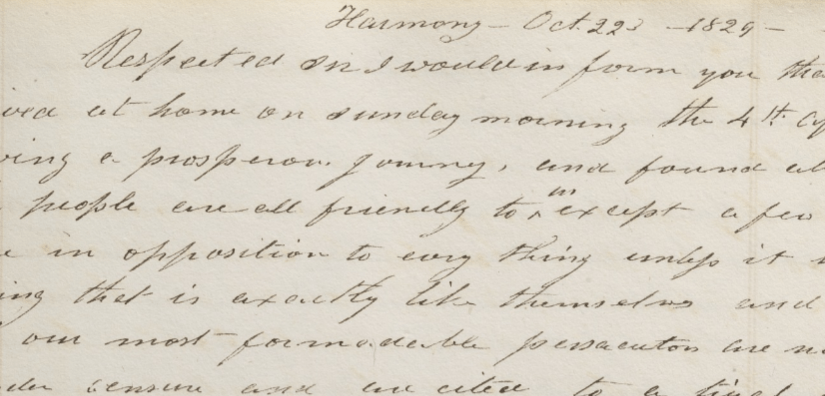








 Oh Say What is Truth?